2026 Best Quiet Coffee Grinder Reviews and Buying Guide?
In the burgeoning world of coffee enthusiasts, the demand for a Quiet Coffee Grinder has surged. Research indicates that 70% of coffee drinkers now prefer a quieter grinding experience. This change stems from the desire to enjoy morning rituals without the harsh noise of traditional grinders. Experts agree that sound levels matter. Dr. Samuel Brewster, a leading authority in the coffee industry, once stated, “Choosing a Quiet Coffee Grinder can enhance your overall coffee experience, allowing you to savor each moment.”
Consumers are becoming more discerning. They seek grinders that balance performance with tranquility. Brands are innovating to address this need, integrating advanced technology to minimize noise. Users report that quieter grinders lead to a more enjoyable brewing process, fostering a deeper connection to their coffee. However, achieving the perfect blend of silence and efficiency is still a challenge for many manufacturers.
Despite the advancements, not all Quiet Coffee Grinders deliver consistent grind quality. This inconsistency can be frustrating for those who value precision in their brewing. A growing number of reviews highlight this concern. As coffee lovers, we must navigate through these options thoughtfully, ensuring we invest in grinders that truly meet our expectations for both quiet operation and performance.

Overview of Quiet Coffee Grinders: Benefits and Key Features
Quiet coffee grinders have become increasingly popular among coffee enthusiasts. They offer several benefits that enhance the brewing experience. The most obvious advantage is noise reduction. Traditional grinders can be quite loud, creating disruptions in quiet mornings or late-night sessions. Using a quiet grinder allows for grinding beans without waking others up. This feature is essential for many coffee lovers who enjoy their routine without disturbance.
Key features of quiet grinders include advanced motor technology and design. These elements help minimize noise while maintaining grinding efficiency. Some grinders utilize sound-dampening materials. This reduces vibrations and overall sound levels. Users often appreciate the consistency in grind size, which is crucial for brewing a quality cup of coffee. Many quiet grinders also offer various grind settings. These settings allow you to customize the thickness based on brewing methods.
However, finding the right quiet coffee grinder can be challenging. Some models may not perform well despite their promise of quiet operation. It’s important to read reviews and compare options carefully. Personal experience and insights from other users can greatly inform your choice. Ultimately, it's about balancing the desire for tranquility with the need for quality coffee. The journey to finding the perfect grinder can lead to surprising discoveries.
Types of Quiet Coffee Grinders: Burr vs. Blade Comparison
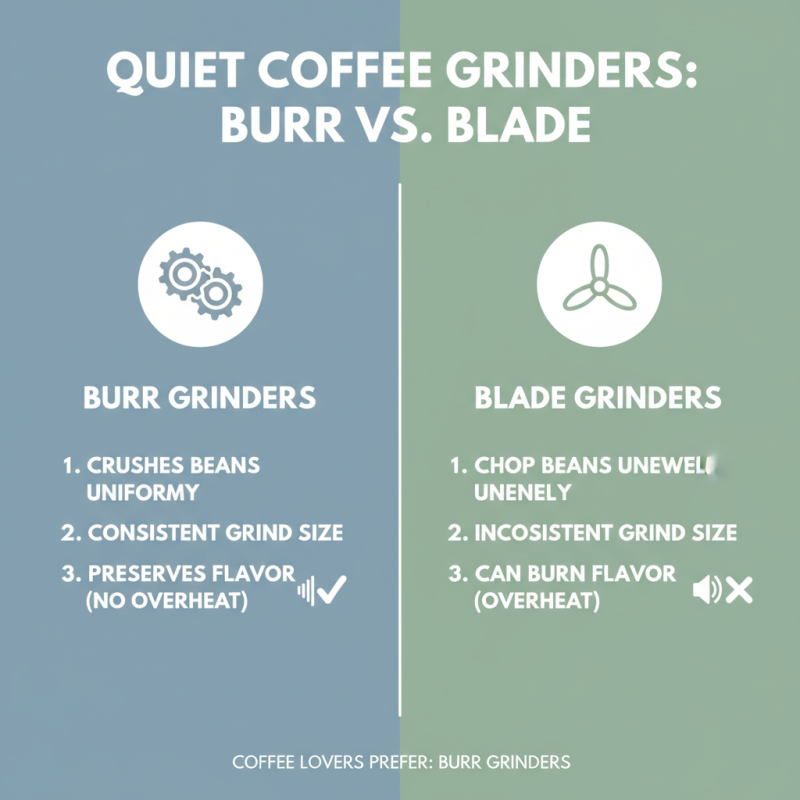
When choosing a quiet coffee grinder, two main types come into play: burr grinders and blade grinders. Burr grinders use two revolving surfaces to crush the coffee beans uniformly. This method offers consistent grind sizes. It prevents overheating, which can impact flavor. Many coffee enthusiasts prefer burr grinders for their precision and quality.
On the other hand, blade grinders chop beans with a spinning blade. This can lead to uneven grind sizes. Inexperienced users might end up with a mix of fine powder and larger chunks. The noise level varies, but some models operate quietly. However, the quality may not match that of burr grinders. For those who enjoy experimenting with flavors, the inconsistency can be both a blessing and a curse.
Choosing between these options depends on individual preferences. If you value quiet operation and consistency, a burr grinder may be best. Yet, if you are on a budget and enjoy a bit of unpredictability, a blade grinder can be a fun choice. Reflecting on your priorities can guide your decision.
Factors to Consider When Buying a Quiet Coffee Grinder
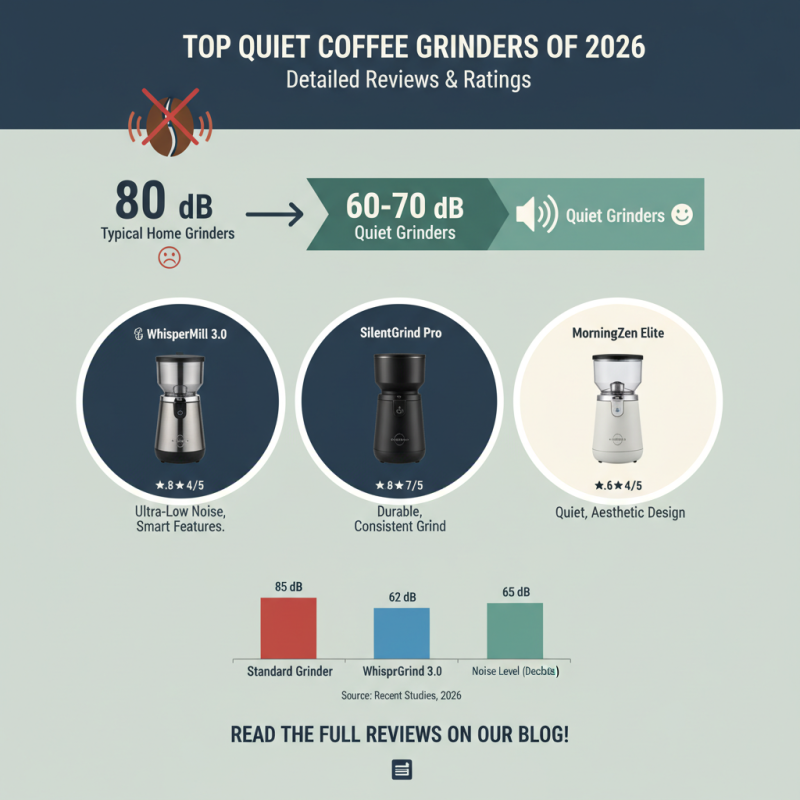
When choosing a quiet coffee grinder, sound levels are crucial. Research indicates that grinders can range from 40 to 90 dB. A quieter model reduces noise pollution, ensuring a serene coffee-making experience. It's essential to look for grinders specifically designed for low decibel operation. These models often utilize advanced motor technologies that minimize sound.
Material is another critical factor. Stainless steel burrs are known for durability and noise reduction. In contrast, cheaper plastics may vibrate and amplify sound. Studies demonstrate that the right material can cut noise by up to 20%.
Tips: Opt for grinders with rubberized bases, as they absorb vibrations. Also, consider the speed settings; lower speeds typically produce less noise.
Importantly, consider ease of cleaning. Grinders that are easy to disassemble encourage regular maintenance. A lack of cleanliness can lead to clogs and increased noise levels. Always check user reviews for insights on noise and maintenance experiences.
Maintenance Tips for Prolonging the Life of Your Coffee Grinder
Maintaining your coffee grinder is key to its longevity and performance. Regular cleaning can prevent the buildup of coffee oils and grounds. The Specialty Coffee Association recommends cleaning the grinder weekly if used daily. This simple maintenance enhances the flavor of your brews. Remember, even a high-end grinder can underperform if neglected.
To further extend your grinder's life, check the burrs regularly. Dull burrs affect grind consistency and can even damage the grinder. A study published by the Journal of Food Science indicates that burrs should be replaced every six months to ensure optimal performance. Using it properly also matters. Avoid grinding too many beans at once; this can lead to overheating.
Finally, store your grinder in a dry, cool place. Humidity can interfere with the internal mechanisms. Not all grinders are made equal, and some may need extra care. If you notice unusual noises or inconsistent grinds, consider it a red flag. Address these issues promptly to avoid costly repairs.