How to Choose a Coffee Bean Grinder in 2026
Choosing a Coffee Bean Grinder in 2026 is less about chasing the newest model and more about matching its performance to your brewing routine. Coffee consultant Scott Rao has put the grinder’s importance plainly: “The grinder is the most important piece of equipment in a coffee shop.” That principle matters at home, too: uneven grounds can leave a cup tasting both bitter and thin.
Start with how you brew. Espresso usually demands fine, repeatable adjustments; French press needs a much coarser range. For pour-over, consistency matters more than a crowded list of settings. Look at burr design, adjustment steps, grind retention, cleaning access, and warranty support. A compact grinder that fits under a cabinet may suit a small kitchen better than a powerful model with a wide footprint. Listen to it, if possible. Early-morning noise is real.
No grinder is perfect. A higher price does not guarantee a better cup for every brewer, and advertised settings do not tell the whole story. Burr alignment, bean freshness, and careful dialing-in also affect results. A few grounds may cling inside the chute. Annoying, but worth checking.
This guide explains how to compare burr and blade designs, choose manual or electric operation, and assess features that matter in everyday use. It also looks at budget, maintenance, and the trade-offs between espresso-focused and all-purpose models. The goal is a practical choice—not a promise that one machine will fix every cup.
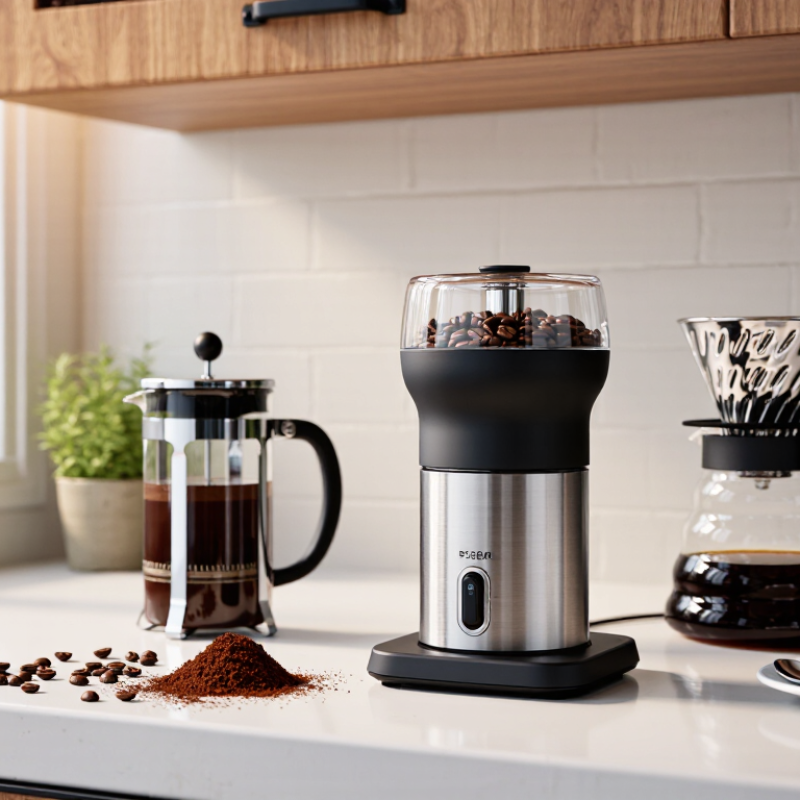
Define Your Brew Method, Dose, and Required Grind Range
Your brew method sets the grinder’s job. Espresso needs fine, repeatable adjustments because a small change can alter how quickly a shot flows. Pour-over usually calls for a medium range, while French press uses a coarser setting. Start with the cup. If you switch between methods, check that the grinder can cover each range without awkward jumps between settings.
Dose matters, too. A daily 18-gram espresso dose may benefit from a grinder that handles small, consistent batches. For pour-over, a 15- to 20-gram dose is common, but your recipe and serving size should guide you. Weigh beans before grinding, then note the setting and brew time. This makes changes easier to evaluate than relying on memory, which is less dependable than it sounds.
Look for clear adjustment steps, steady particle size, and a grind range suited to your actual routine. A wide range is not automatically useful if most settings are difficult to repeat. There is a trade-off. A grinder optimized for espresso may feel fussy for occasional coarse brewing, and switching settings can leave stray grounds behind. Try a few brews with the dose you usually make. If results vary, adjust one factor at a time; even then, the beans and water can complicate the picture.
Choose Burrs Over Blades for More Consistent Particle Sizes
A burr grinder crushes beans between two toothed surfaces, producing a more even mix of particles than a spinning blade. In 2026, that difference still matters. Similar-sized grounds tend to extract at a more predictable rate, which can make a cup taste less sharply sour or harshly bitter. Blade grinders chop unevenly. You may find powder at the bottom of the cup and larger fragments beside it. That variation is hard to correct with brewing technique alone.
Look for adjustable burr settings that suit your brewing method, from coarse grounds for a press to finer grounds for espresso. More settings can help, but they do not guarantee better coffee. Check whether adjustments feel secure, and whether the burr chamber is easy to brush clean. Grounds can cling around the edges. A simple test: grind a small dose and inspect it under good light. Some variation is normal. Even burr grinders have quirks, and a tidy-looking grind does not promise a perfect cup. Change one setting at a time, then taste before adjusting again.
Match Burr Design and Adjustment Range to Espresso or Filter
A grinder should match the coffee you actually brew. Espresso needs small, repeatable adjustments because a slight change can make a shot run noticeably faster or slower. Filter brewing usually tolerates wider steps, though grind consistency still matters for a balanced cup. Burr geometry shapes how beans are cut, but no design guarantees better coffee in every kitchen.
Flat and conical burrs can both produce excellent results. Their output varies with burr shape, alignment, speed, and the coffee itself, so avoid choosing by geometry alone. For espresso, look for a stable fine range and adjustments small enough to correct a shot without overshooting. Test with the same dose and basket; change one variable at a time. It takes patience.
For pour-over or drip, a grinder with clear, useful settings across medium and coarse ranges is often more practical than one focused narrowly on espresso. Check how easily settings return to a previous position, especially if you switch between brew methods. A numbered dial helps, but markings are not universal measurements. Keep notes on the setting, dose, and brew time. I still find that a familiar setting sometimes needs a small correction when beans age or humidity changes.
Choose a Grinder by Brew Method
Approximate target grind-size ranges (micrometers). Espresso generally needs a finer adjustment range; filter brewing uses coarser settings. Actual results vary with the grinder, beans, and recipe.
Use SCA Brew Targets: 18–22% Extraction and 1.15–1.35% TDS
How to Choose a Coffee Bean Grinder in 2026
Choose a grinder that makes repeatable adjustments, not just fine-looking grounds. The Specialty Coffee Association’s Brewing Control Chart places a common brewed-coffee target at 18–22% extraction and 1.15–1.35% total dissolved solids (TDS). Use these figures to assess your brew, not to judge a grinder by its settings alone. Particle consistency, coffee dose, water, and brewing time all affect the result. A refractometer can help track TDS, but uneven sampling may distort readings. Small changes matter.
When comparing grinders, check whether small adjustments produce noticeable, predictable changes in the cup. Brew the same coffee with the same dose and water, then change only the grind setting. If the cup tastes harsh, try a coarser setting; if it tastes thin or sour, try finer. These are clues, not rules. The SCA targets are useful reference points, but they cannot capture every coffee or personal preference. A grinder may also retain grounds, so weigh your dose before and after grinding if consistency matters.
Tips: Keep a simple log of grind setting, brew time, TDS, and taste. Repeat each test once. One reading can mislead.
Compare Retention, Speed, Noise, Capacity, and Cleaning Needs
Retention is the coffee left inside a grinder after dosing. It matters most when switching beans or brewing one cup at a time. Weigh 18 grams in, then weigh the grounds out; repeat this test across several doses. A small difference is easier to manage than stale grounds trapped in a chute. There is no universal retention limit, so treat your own measurements as the useful benchmark.
Speed helps on rushed mornings, but fast grinding can bring more noise and heat. Listen to the grinder in your kitchen, not only in a showroom. The National Coffee Association’s 2024 National Coffee Data Trends report found that 67% of U.S. adults drank coffee the previous day. For a daily ritual, a few seconds saved may matter less than a sound you dislike every morning. Small detail. It adds up.
Capacity should match your routine. A 250-gram hopper holds about sixteen 15-gram doses, but keeping beans in a large hopper may not suit occasional brewing. Check whether the hopper and grounds chute are easy to remove, and whether a brush reaches hidden corners. Cleaning needs are easy to underestimate. A practical trial: grind a few doses, then check how long routine cleanup takes. Some grinders look simple until coffee dust collects around the exit.