How to Choose the Best Small Burr Grinder for Your Needs?
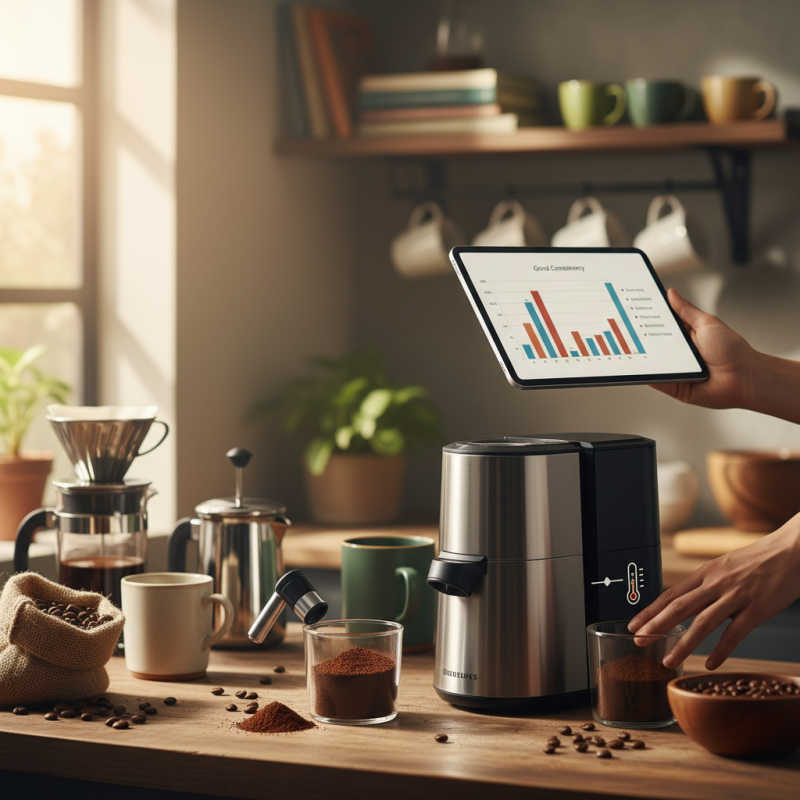
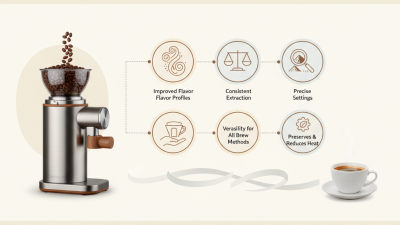
When selecting a small burr grinder, precise choices matter. Research from the Specialty Coffee Association indicates that grind size significantly influences coffee extraction. An ideal small burr grinder should deliver consistent particle sizes, enhancing your brewing experience.
Consider the grinding mechanism. Small burr grinders are designed to minimize heat buildup. This heat can negatively impact flavor. The ideal option retains the coffee's natural oils and aromas. However, the market is saturated with choices, making it challenging to identify the best option for your needs.
In addition, user reviews highlight the importance of ease of use and maintenance. Some models excel in grind consistency, while others struggle. Investing in a trusted small burr grinder enhances your coffee journey. Consider your brewing methods and preferences. This will lead to a more satisfying cup each morning.
Understanding Burr Grinders: Types and Mechanisms Explained
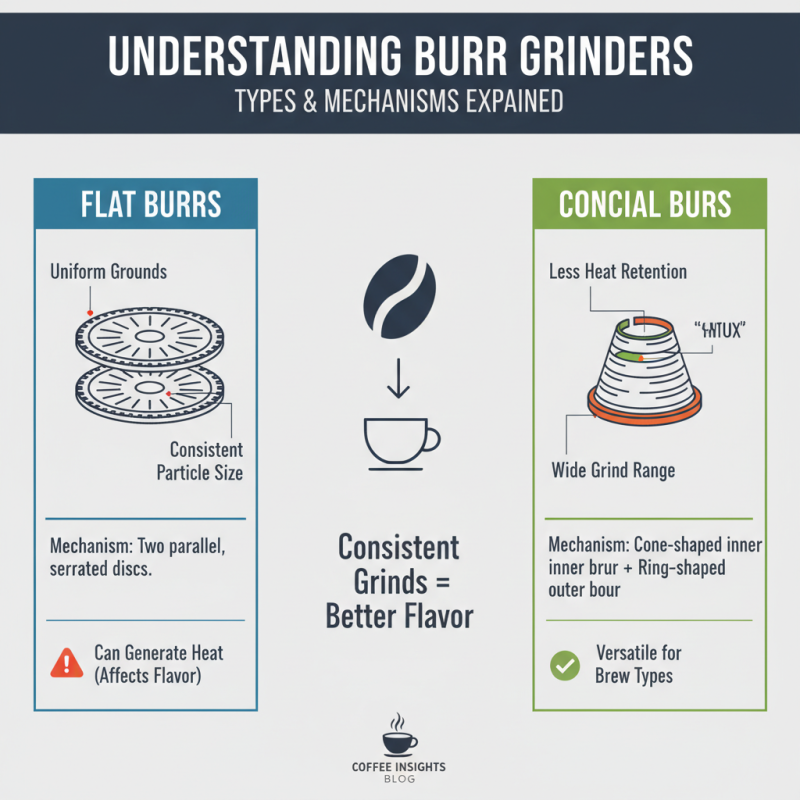
When selecting a small burr grinder, understanding the different types and mechanisms is crucial. Burr grinders are known for providing consistent coffee grinds, which directly influence your brew's flavor. The two primary types of burr grinders are flat and conical. Flat burrs create uniform grounds but can generate heat, potentially affecting flavor. In contrast, conical burrs tend to retain less heat and provide a wider range of grind sizes.
Picking the right type matters. It can significantly impact your coffee experience. Consider your brewing method. If you prefer espresso, you might lean towards a conical burr grinder. On the other hand, a flat burr grinder may suit pour-over coffee better. It's essential to evaluate your coffee habits and adjust accordingly.
**Tips:** Choose a grinder with adjustable settings for grind size. This versatility allows you to experiment. Pay attention to the build quality. A well-constructed grinder may cost more but often lasts longer. Remember, sometimes the most expensive options aren't the best for your needs. Reflect on your daily coffee habits and adjust your choices based on actual use.
Key Factors in Choosing a Small Burr Grinder for Home Brewing
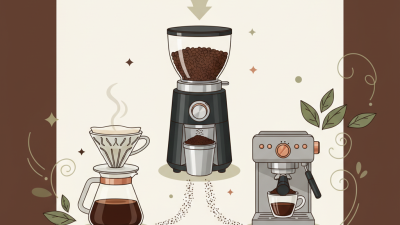
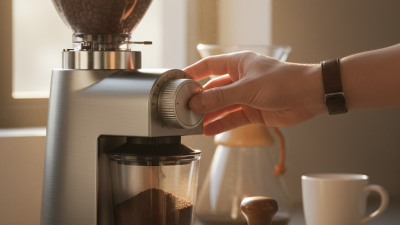
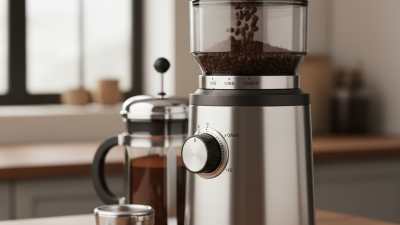
When choosing a small burr grinder for home brewing, several factors come into play. Think about the grind settings. A versatile grinder offers different options, allowing you to adjust the texture for various brewing methods. Consider your brewing style. An espresso machine demands a finer grind compared to a French press. Finding a grinder that meets your specific needs is essential.
Another important aspect is the grinder's build quality. A sturdy construction ensures longevity and consistent performance. Look for a grinder with a reliable motor. Cheaper options might overheat quickly, affecting your coffee's flavor. Noise levels can also be a consideration. Quiet operation makes for a more pleasant morning routine.
**Tips:** Check user reviews to gauge the grinder's reliability. Consider the ease of cleaning as well. A grinder should be simple to maintain for optimal performance. Lastly, think about the size. A compact model fits well in small kitchens but still delivers quality grinds. It's important to reflect on your space and needs before making a purchase.
How to Choose the Best Small Burr Grinder for Your Needs?
| Feature |
Importance for Home Brewing |
Recommended Range |
| Grind Size Settings |
Allows customization for different brewing methods |
Minimal 5 settings; Optimal 10+ settings |
| Burr Type |
Impacts grind consistency and flavor extraction |
Flat burr or conical burr preferred |
| Grind Speed |
Affects heat generation which can alter flavor |
Less than 500 RPM is ideal |
| Capacity |
Determines how much coffee can be ground at once |
8 oz to 12 oz for small grinders |
| Ease of Use |
Influences daily convenience and coffee experience |
User-friendly controls and easy cleaning |
| Price |
Should reflect quality and durability |
$50 to $200 depending on features |
Evaluating Grind Sizes: Importance for Different Coffee Brewing Methods
When it comes to coffee brewing, grind size plays a crucial role.
Different brewing methods require specific grind sizes for optimal extraction.
For instance, espresso needs a fine grind to ensure a rich, concentrated flavor.
Conversely, French press coffee thrives on a coarse grind
to prevent over-extraction and bitterness. Matching the grind size to your brewing method can enhance the overall taste.
Choosing a small burr grinder can aid in achieving the desired grind sizes.
Burr grinders provide consistent particle size, which is essential for uniform brewing.
However, not all burr grinders perform the same way.
Some may struggle with achieving very fine or coarse sizes.
Evaluating user reviews and product specifications is necessary.
Consider if a machine can handle various grind sizes effectively.
While seeking the perfect small burr grinder, keep in mind that adjustments might be necessary over time.
Many users report that achieving the right grind can involve trial and error.
It's beneficial to experiment with different settings.
A grinder that lacks clear markings can lead to confusion.
Document your settings for each method to find your sweet spot, ensuring a better brew each time.
Comparative Costs: Budgeting for a Quality Small Burr Grinder
When budgeting for a quality small burr grinder, it’s essential to understand the price range. According to recent industry reports, most reliable small burr grinders fall between $30 to $150. Lower-end models may not provide the consistency needed for a great cup of coffee. While they may seem tempting, these options often lead to frustration.
Mid-range grinders, priced around $70 to $100, often offer a balanced combination of durability and precision. They typically feature adjustable settings for grind size, which is crucial for crafting different coffee styles. On the higher end, grinders above $150 can deliver exceptional results, but not everyone needs this level of performance.
Consider total costs, including maintenance and potential repairs. Some entry-level grinders may require frequent replacements. Investing wisely in a grinder could save money in the long run. Quality tends to correlate with cost, but be aware of marketing hype. Reliability in performance is critical. Focus on user reviews and expert recommendations when making your choice.
Comparative Costs of Small Burr Grinders
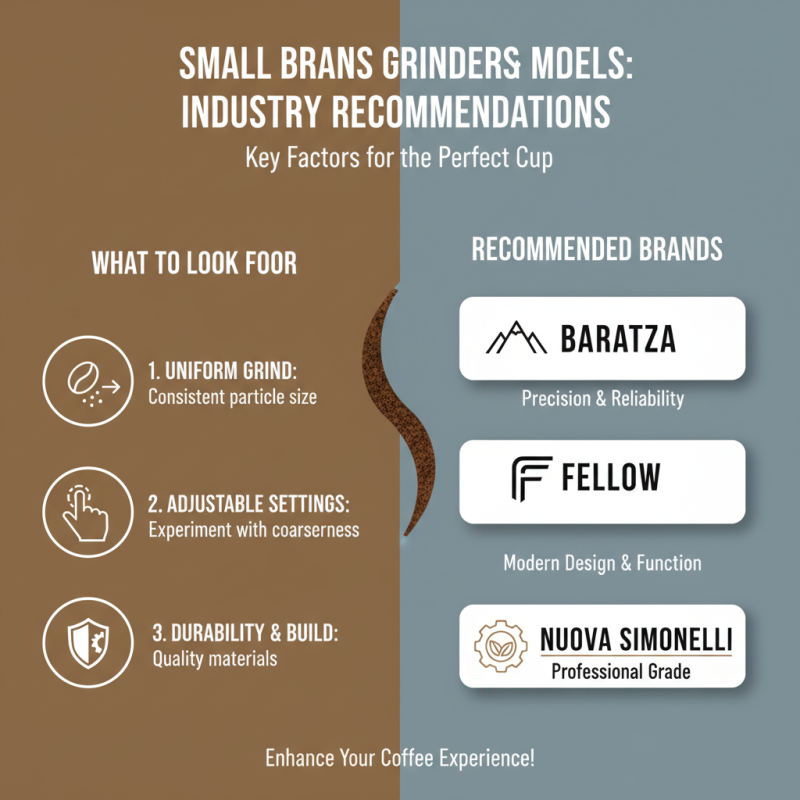
Top Brands and Models: Industry Recommendations and Reviews
When selecting a small burr grinder, understanding the available options is crucial. Many enthusiasts recommend focusing on brands that emphasize quality. These companies often provide reliable performance and durability. A well-constructed grinder can enhance your coffee experience, ensuring even particle size for consistent extraction. Look for models with adjustable settings, allowing you to experiment with grind sizes.
User reviews often highlight specific features. Many find that a hopper with a decent capacity is helpful. Some users appreciate grinders with a quieter operation, which can be a significant factor in a small kitchen. It’s important to read multiple reviews before making a decision. Some models may work well for espresso but not for French press brewing. Consider your brewing style to find the right match. Additionally, investing in a grinder that is easy to clean can save time and effort in the long run.
Some individuals have reported issues with grinders that do not perform well over time. Others mention that the initial grind quality can degrade. This highlights the importance of researching longevity and maintenance before purchase. Prioritizing reliability can prevent future dissatisfaction. By carefully comparing features and user feedback, you’ll find a grinder that meets your specific needs. Keep in mind that the right choice enhances your daily coffee ritual.