What is a Conical Burr Grinder and How Does it Work?
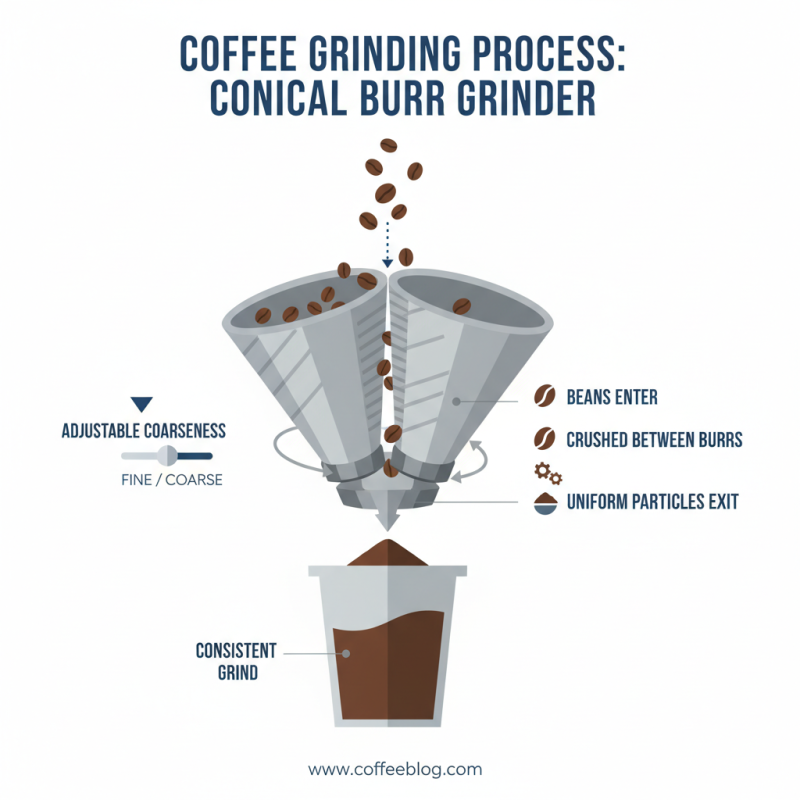
In the world of coffee enthusiasts, the "Conical Burr Grinder" stands out. Renowned expert James Hoffmann states, "A good grind is crucial for great coffee." This emphasizes the role of grinders in brewing quality beverages. A conical burr grinder uses two conical-shaped burrs to crush beans uniformly. This design improves consistency compared to traditional blade grinders.
The grinding process is vital. When beans are ground, their surface area expands. This affects flavor extraction during brewing. If the grind is uneven, some beans may over-extract while others under-extract. A conical burr grinder addresses these issues. Its design allows for better control over grind size, ensuring a balanced flavor profile in your cup.
However, not all conical burr grinders are the same. Some models may grind inconsistently or produce heat, which can alter taste. It’s important to choose carefully and experiment. Each bean variety may require different settings. Finding the ideal grind can take time and practice. The journey of mastering your conical burr grinder is as important as the end result.
What is a Conical Burr Grinder?
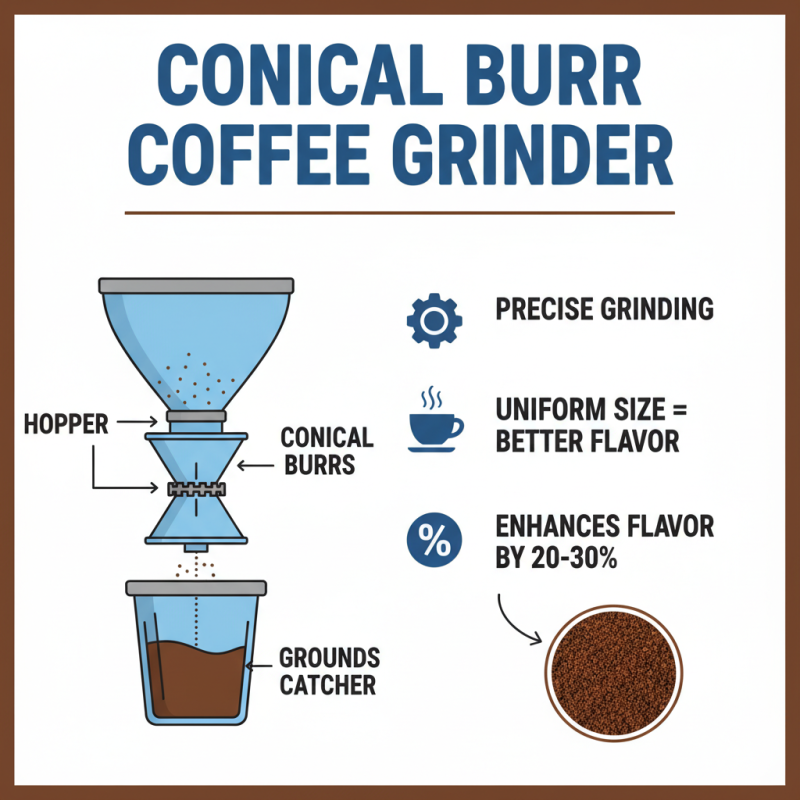
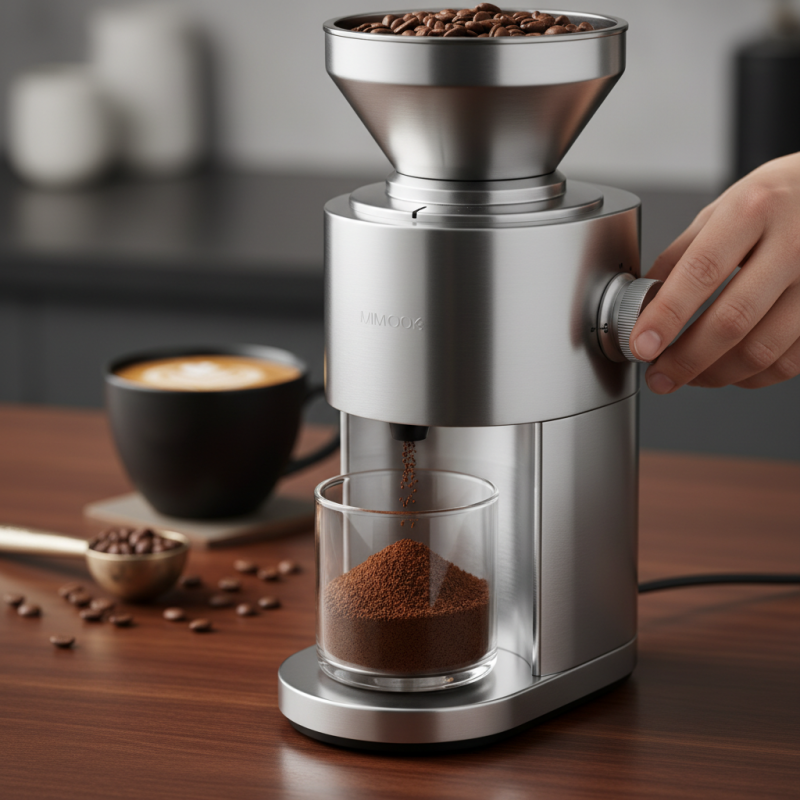
A conical burr grinder is a popular choice for coffee enthusiasts. It features two cone-shaped grinding surfaces that crush coffee beans uniformly. This design maintains the coffee's flavor and aroma better than blade grinders.
The key aspect of a conical burr grinder is its ability to produce consistent grind sizes. This allows for better extraction during brewing. The adjustable settings let users choose between fine or coarse grinds. A finer grind works well for espresso, while a coarser grind suits French press coffee.
Tips for using a conical burr grinder: Always clean the burrs regularly. This prevents flavor contamination from old coffee residues. Also, experiment with grind settings. Finding the perfect size for your coffee method can take time. Don’t hesitate to make adjustments; small changes can have a sizable impact on taste.
Lastly, be mindful of the amount you grind. Grinding too much coffee can lead to waste. It’s easy to overdo it, so measure carefully. Enjoy the process of finding your perfect grind.
Comparative Analysis of Coffee Grind Sizes
This chart illustrates the different grind sizes typically produced by conical burr grinders, measured in microns. Each grind size is essential for different brewing methods, affecting the extraction of flavors from the coffee beans.
How Conical Burr Grinders Operate
A conical burr grinder uses two cone-shaped burrs for grinding coffee beans. This design allows for a consistent grind size, which is crucial for brewing quality coffee. The top burr is adjustable, letting you choose between a coarse or fine grind. The beans are fed into the grinder and fall between the burrs. As they pass through, they are crushed and ground evenly.
Tips: Adjusting the grind size can significantly impact flavor. Experiment with different settings to find your perfect brew.
The grinding process is quieter than blade grinders. This is important for early morning coffee lovers. The uniformity of the grind also means you can extract more flavor during brewing.
However, not every burr grinder operates perfectly every time. It’s common to experience some clogs or uneven grinding, especially with oily beans. Regular cleaning can help maintain performance.
Tips: Clean your grinder every few weeks to avoid stale tastes. A soft brush can reach hard-to-clean areas effectively.
Advantages of Using a Conical Burr Grinder
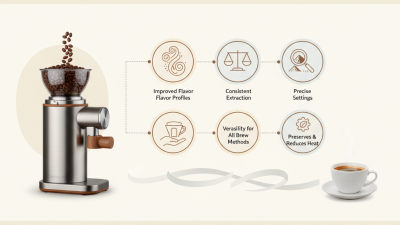
Conical burr grinders are favored for their efficiency in coffee grinding. They provide a consistent grind size, which impacts extraction and flavor. Research indicates that grind consistency can improve brew quality by up to 35%. This precision allows coffee enthusiasts to enjoy richer and more nuanced flavors.
Using a conical burr grinder significantly reduces heat generation during the grinding process. Unlike blade grinders, burr grinders maintain the integrity of the coffee's essential oils and aroma. A study found that excessive heat can diminish flavor by degrading volatile compounds in coffee. This is crucial for those aiming to explore the full spectrum of coffee notes.
Another advantage is their versatility. Conical burr grinders can easily adapt to various brewing methods. Whether you prefer espresso or French press, they offer adjustable settings for grind size. However, some users may find the calibration process daunting. This complexity can turn away casual coffee drinkers who seek convenience over craftsmanship. Nonetheless, dedicated coffee lovers appreciate the control and quality that come with a conical burr grinder.
Comparing Conical Burr Grinders to Other Grinder Types
When comparing conical burr grinders to other types, the differences in grind quality are striking. Conical burr grinders use two cone-shaped burrs to grind coffee beans evenly. This design reduces friction and heat, preserving the coffee's flavor. According to a 2022 study by the Specialty Coffee Association, conical burr grinders produce more uniform particle size compared to blade grinders. This consistency leads to better extraction during brewing.
In contrast, blade grinders chop beans irregularly, resulting in uneven grinds. This inconsistency can adversely affect the taste of the coffee. Reports indicate that 70% of baristas prefer conical burr grinders for their ability to create the ideal grind for espresso. However, conical burr grinders can be more expensive, which may deter casual coffee drinkers.
Some users may find them complex to operate and clean. Maintenance is essential to keep the grinder functioning well. Ignoring this can lead to rancid flavors from old coffee oils. Therefore, it's crucial to weigh the benefits of grind quality against potential drawbacks like cost and upkeep.
What is a Conical Burr Grinder and How Does it Work? - Comparing Conical Burr Grinders to Other Grinder Types
| Grinder Type |
Grind Consistency |
Heat Generation |
Grind Speed |
Ease of Cleaning |
Price Range |
| Conical Burr Grinder |
Uniform |
Low |
Moderate |
Easy |
$100 - $400 |
| Flat Burr Grinder |
Consistent |
Medium |
Fast |
Moderate |
$50 - $300 |
| Blade Grinder |
Inconsistent |
High |
Very Fast |
Difficult |
$20 - $100 |
| Manual Grinder |
Variable |
Low |
Slow |
Easy |
$15 - $100 |