10 Essential Tips for Choosing the Perfect Espresso Coffee Grinder: Boost Your Brew Quality
When it comes to brewing the perfect cup of espresso, the choice of equipment plays a pivotal role, particularly the Espresso Coffee Grinder. According to renowned coffee expert James Hoffmann, "The grinder is arguably the most important piece of equipment when it comes to making great espresso." With the right grind size and consistency, even the finest beans can be transformed into a sublime espresso experience. However, navigating the myriad of options available can be overwhelming for both beginners and seasoned baristas alike.

To elevate your espresso brewing game, it's essential to understand the key features and specifications that define an excellent Espresso Coffee Grinder. From burr types to grind settings, each element contributes to the final flavor profile of your espresso. This article presents ten essential tips to help you choose the perfect grinder for your needs, ensuring that your daily coffee ritual is nothing short of spectacular. Whether you're looking to enhance your home brewing setup or seeking professional-grade equipment, arming yourself with the right knowledge can make all the difference in your pursuit of espresso perfection.
Choosing the Right Grind Size: How It Affects Espresso Extraction Quality
When it comes to brewing the perfect espresso, the grind size of your coffee beans plays a pivotal role in determining extraction quality. A report by the Specialty Coffee Association found that inconsistencies in grind size can lead to variations in extraction yields, often resulting in either bitter or weak flavors in the final cup. Ideally, espresso requires a fine grind, typically around 200-300 microns, to ensure optimal water penetration during the short brewing time. Any deviation from this range can significantly impact the solubility of compounds that influence taste and aroma, making uniformity essential for achieving the desired flavor profile.
Moreover, the impact of grind size extends beyond just extraction efficiency; it also influences the brew time and pressure needed for optimal espresso. Increasingly coarse grinds can lead to under-extraction, while overly fine grinds may cause over-extraction and increased bitterness. The International Coffee Organization indicates that consistently achieving the right grind can enhance the brew quality by up to 20%, emphasizing the importance of investing in a high-quality espresso grinder capable of producing uniform particles. This precision not only elevates the taste but also allows for greater control over the brewing parameters, resulting in a richer and more balanced espresso.
10 Essential Tips for Choosing the Perfect Espresso Coffee Grinder
| Tip Number |
Tip |
Details |
Impact on Brew Quality |
| 1 |
Choose the Right Burr Type |
Flat burrs vs. conical burrs |
Affects consistency of grind |
| 2 |
Adjust Grind Size |
Finer for espresso, coarser for French press |
Influences extraction and flavor |
| 3 |
Consider Grind Retention |
Retention can affect freshness |
Maintains quality of brewed coffee |
| 4 |
Examine Speed and Noise |
High speed might cause heat |
Affects aroma and flavor |
| 5 |
Durability and Build Quality |
Material and construction |
Ensures long-term performance |
| 6 |
Easy to Adjust Settings |
Simplifies grind size changes |
Allows for experimenting with flavors |
| 7 |
Check Capacity |
Grind enough for single or multiple servings |
Impacts convenience and efficiency |
| 8 |
Consider Price |
Balance between quality and budget |
Determines overall value |
| 9 |
Research Brand Reputation |
Customer reviews and ratings |
Informs quality and reliability |
| 10 |
Warranty and Support |
Check for product guarantees |
Provides peace of mind |
Understanding Burr vs. Blade Grinders: Which Type Enhances Brew Consistency?
When it comes to brewing the perfect espresso, the choice between a burr grinder and a blade grinder can significantly impact the quality of your coffee. Burr grinders use two revolving hard surfaces to crush the coffee beans evenly, allowing for a consistent grind size that enhances flavor extraction during brewing. This method is essential for espresso, as a uniform grind ensures that the water flows through the coffee evenly, providing a rich and balanced shot.
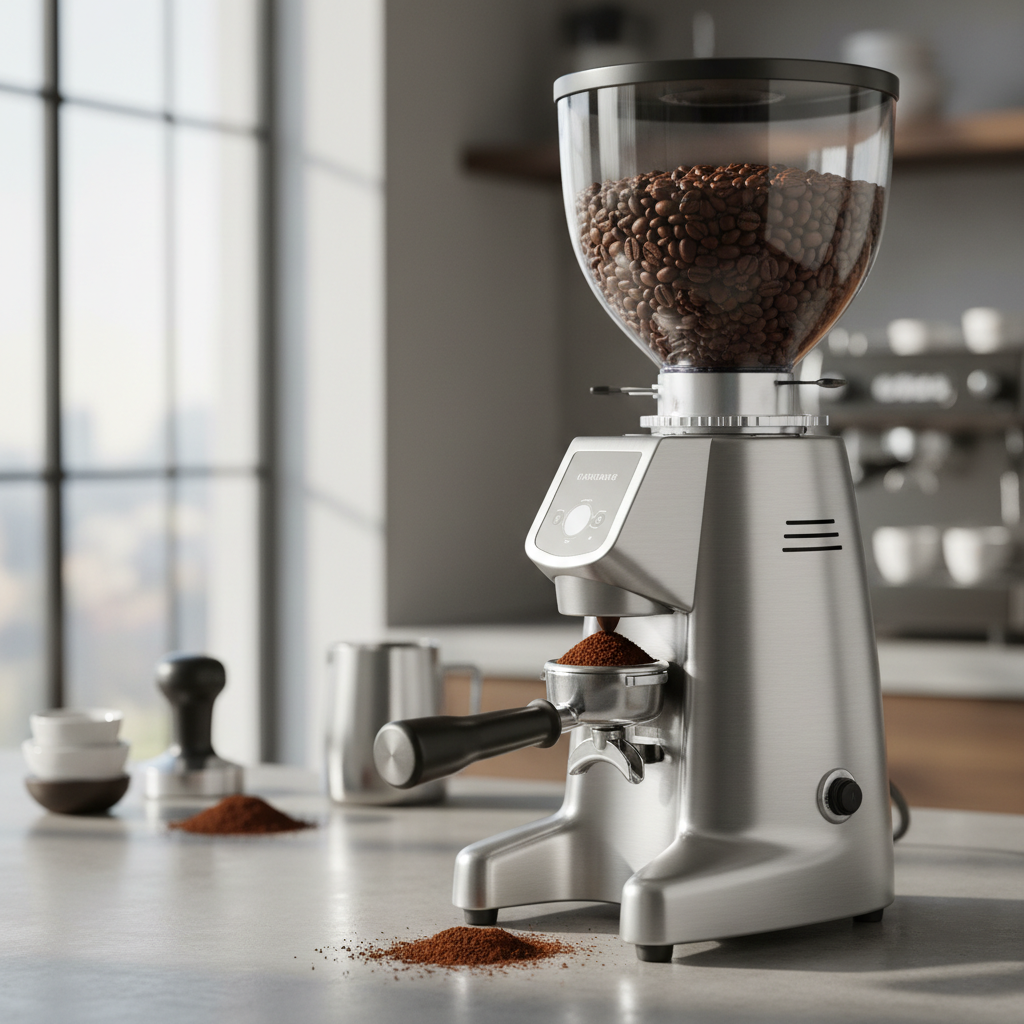
On the other hand, blade grinders chop the coffee beans using a spinning blade, which can result in an inconsistent particle size. This inconsistency can lead to over-extraction of some coffee grounds while under-extracting others, ultimately compromising the flavor profile of your espresso. For serious coffee enthusiasts, investing in a burr grinder is a vital step to achieve brew consistency and unlock the full potential of your beans. Understanding these differences is key to enhancing your espresso experience and making informed choices in your coffee journey.
The Importance of Grind Distribution: Creating Uniform Particle Size for Better Flavor
When selecting an espresso coffee grinder, one of the most critical factors to consider is grind distribution. The consistency of particle size in your coffee grounds directly influences the extraction process, which ultimately affects the flavor of your brew. Uneven particle sizes can lead to a phenomenon known as channeling, where water flows through the coffee bed irregularly, causing some grounds to be over-extracted and others to be under-extracted. This imbalance results in a cup that lacks depth and complexity, often tasting bitter or flat.
Achieving a uniform grind is essential for maximizing flavor extraction. A high-quality grinder will produce grounds that vary little in size, ensuring that each part of the coffee bed receives the same amount of water. This uniformity not only enhances the flavor profile but also promotes a balanced aroma and body in your espresso. When assessing grinders, look for features such as burr types and grind settings, which are crucial for managing grind distribution effectively. By prioritizing grind consistency, you'll elevate your espresso-making experience and extract the full potential of your coffee beans.
Evaluating Build Quality and Durability: Long-Term Value in Espresso Grinders
When selecting an espresso coffee grinder, evaluating build quality and durability is crucial for ensuring long-term value. A grinder made from high-quality materials not only withstands the wear and tear of daily use but also maintains its performance over time. Stainless steel burrs, for instance, are preferred for their durability and ability to deliver consistent grind sizes, essential for brewing a perfect cup of espresso. Additionally, a sturdy housing, often made from metal rather than plastic, contributes to the overall robustness of the grinder, reducing vibrations that can affect grind consistency.
Long-term value isn’t solely about the materials used; it also encompasses the grinder's design and features. Look for grinders that are easy to clean and maintain, as this will prolong their lifespan. Models with removable parts or accessible burrs make it simpler to keep your grinder in top condition. Moreover, investing in a grinder with a solid warranty can provide extra peace of mind regarding its durability. By prioritizing build quality and durability, espresso enthusiasts can ensure that their grinder will not only enhance their brewing experience but also stand the test of time.
Price vs. Performance: Finding the Balance for Your Espresso Grinder Investment
When it comes to investing in an espresso coffee grinder, the balance of price and performance is crucial for achieving the best brew quality. Research indicates that specialty coffee grinders, which often come with a higher price tag, can significantly enhance the flavor profile of your espresso. A study from the Specialty Coffee Association found that grinders priced in the range of $200 to $500 not only offer improved grind consistency but also have a direct impact on the extraction process, resulting in a richer and more aromatic cup.
However, it’s essential to understand that spending more does not always guarantee superior performance. A report by the Coffee Quality Institute highlights that certain mid-range models, priced around $100 to $200, can yield remarkably good results if they utilize conical burrs and feature precise grind settings. Choosing a grinder that meets your specific brewing needs while adhering to a budget can lead to an exceptional espresso experience. Therefore, consider factors such as grind consistency, build quality, and user reviews, which often reveal insights that price alone may not indicate.