Leave Your Message

Top 10 Coffee Bean Grinder Tips You Need to Know?

When it comes to brewing the perfect cup of coffee, the right Coffee Bean Grinder can make all the difference. Expert barista Anna Jones once remarked, “A good grinder is as essential as quality beans.” This highlights the importance of selecting the best grinder to enhance your coffee experience.

Many coffee enthusiasts overlook the intricacies of grinding. It’s not just about speed; it’s about consistency and grind size. A well-calibrated Coffee Bean Grinder ensures that each grind releases the optimal flavors. Frustrations can arise when coffee tastes weak or bitter, often due to improper grinding techniques. Exploring various grinder types will aid in your quest for the ideal cup.

Understanding your grinder’s settings can be daunting. Many users misuse their equipment, leading to less-than-satisfactory results. Regular adjustments and maintenance can greatly improve your grinding process. Investing time into learning about your Coffee Bean Grinder will yield a more satisfying coffee ritual. After all, the path to great coffee begins with the right grind.
Top 10 Coffee Bean Grinder Tips You Need to Know?

Essential Factors to Consider When Choosing a Coffee Bean Grinder

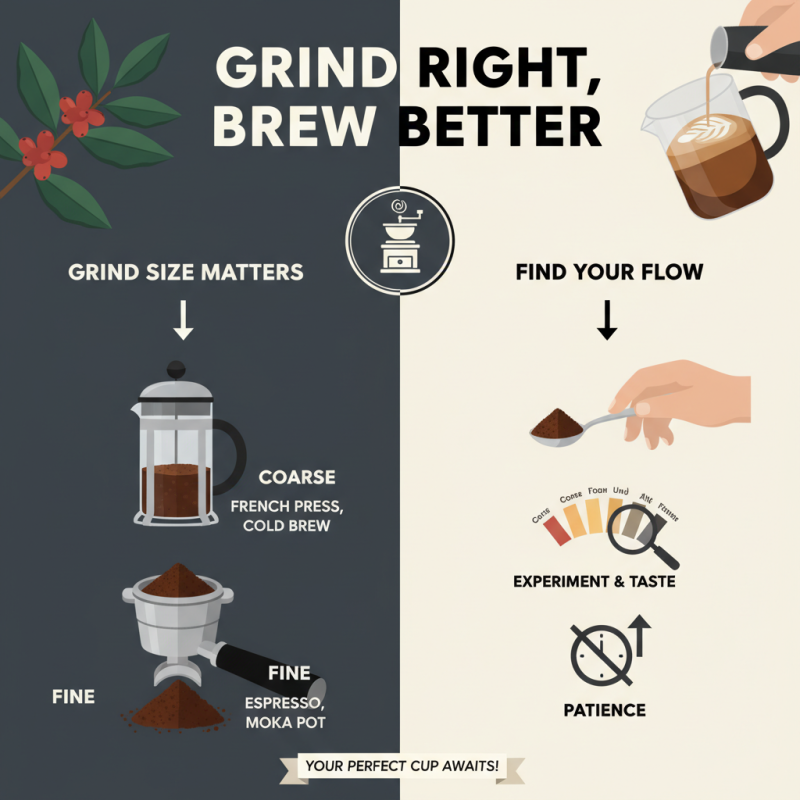
When selecting a coffee bean grinder, several essential factors are crucial for achieving the perfect brew. Grind size is one of the most important. A report by the Specialty Coffee Association reveals that different brewing methods require specific grind sizes. For instance, espresso demands a fine grind, while French press needs a coarse grind. Knowing your preferred brewing style guides your grinder choice.

Another key aspect is the grinder type. There are two main types: blade and burr grinders. Blade grinders chop beans unevenly, leading to inconsistent flavor. According to a study by the University of Florida, uniform particle size significantly enhances extraction. Burr grinders, on the other hand, provide a more uniform grind and better control. This consistency can enhance the flavor of the coffee, making it rich and aromatic.

Durability is also a factor to reflect on, especially with frequent usage. A well-built grinder lasts longer, saving you money in the long run. Many grinders may fail in less than five years of daily use. Investing in a higher-quality model might be wise even if it seems pricey initially. The choice shouldn't solely rely on trends but rather on how well the grinder meets your brewing needs and lifestyle.

Top 10 Coffee Bean Grinder Tips You Need to Know

Tip Number Tip Description Consideration
1 Choose the right grind size for your brew method. Different methods require different grind sizes.
2 Consider the grinder type: blade vs. burr. Burr grinders offer more consistent results.
3 Check the grinder's capacity. Ensure it can hold enough beans for your needs.
4 Look for adjustable settings. Flexibility for different coffee styles is key.
5 Ease of cleaning should be a priority. Keep your grinder clean for better tasting coffee.
6 Consider noise level if grinding early or late. Lower noise is often preferable.
7 Evaluate durability and build quality. Invest in a grinder that will last.
8 Understand the importance of heat retention. Minimize heat to preserve flavor and aroma.
9 Ensure the grinder has a reliable motor. A strong motor is crucial for consistent grinding.
10 Compare prices and read reviews. Find the best value for your budget.

Understanding Different Types of Coffee Bean Grinders and Their Uses

Understanding different types of coffee bean grinders is crucial for brewing the perfect cup. There are two main types: blade grinders and burr grinders. Blade grinders use sharp blades to chop beans, offering a quick, basic option. However, they can produce uneven grounds. Some may overlook this, but uniformity affects extraction.

Burr grinders, on the other hand, crush beans between two grinding surfaces. This method gives a more consistent texture. While they often cost more, they can elevate your coffee experience. Choosing the right grinder may seem straightforward, yet many choose based on price over quality.

Each grinder type has its strengths and weaknesses. Blade grinders are portable and easy to use but may leave larger chunks behind. Burr grinders provide precise control over grind size—essential for different brewing methods. Not everyone realizes this importance, which can lead to disappointing brews. Investing in a good grinder can make a remarkable difference.

Tips for Properly Measuring Coffee Beans Before Grinding

Measuring coffee beans accurately is crucial for optimal flavor. Many coffee enthusiasts overlook this step. They often eyeball the beans, leading to inconsistent results. Using a scale can improve precision. Aim for about 15 grams of coffee for a single cup. It’s easier than you might think.

Some people prefer volume measurements. A standard coffee scoop holds roughly 10 grams. However, not all scoops are equal. This can lead to varying brew strengths. Remember, the grind size also affects extraction, so adjust as needed. If the result is too bitter or weak, reflect on your measurements.

Avoid over-complicating the process. A simple kitchen scale and a consistent method can transform your brewing experience. Experiment with different ratios and observe the changes. Don’t hesitate to note what works best for your taste buds. Enjoy the journey of discovery with each cup you prepare.

Top 10 Coffee Bean Grinder Tips - Bean Measurements

Best Practices for Grinding Coffee Beans for Optimal Flavor

Top 10 Coffee Bean Grinder Tips You Need to Know?

Grinding coffee beans correctly can greatly enhance your brewing experience. One essential tip is to choose the right grind size. For example, a coarse grind suits French presses, while a fine grind works best for espresso. Finding the perfect size can take practice. Don’t rush this step; experiment with different grinds to discover your preference.

Another crucial aspect is the freshness of your beans. Grinding just before brewing unlocks the full flavor potential. Consider buying whole beans and a grinder if you haven't already. However, remember that not all grinders do a great job. Some may produce inconsistent particles, affecting taste. It’s worth reflecting on the impact of this choice.

Lastly, the consistency of your grind matters. Uneven grinds can lead to over-extraction or under-extraction. If you notice a bitter taste, your grind may be too fine. A bolder flavor might indicate the opposite. Keep adjusting until you find what works best for you. Good coffee is often a result of small tweaks and observations. Enjoy the journey of perfecting your brew!

Maintenance and Cleaning Tips for Longevity of Your Coffee Grinder

Top 10 Coffee Bean Grinder Tips You Need to Know?

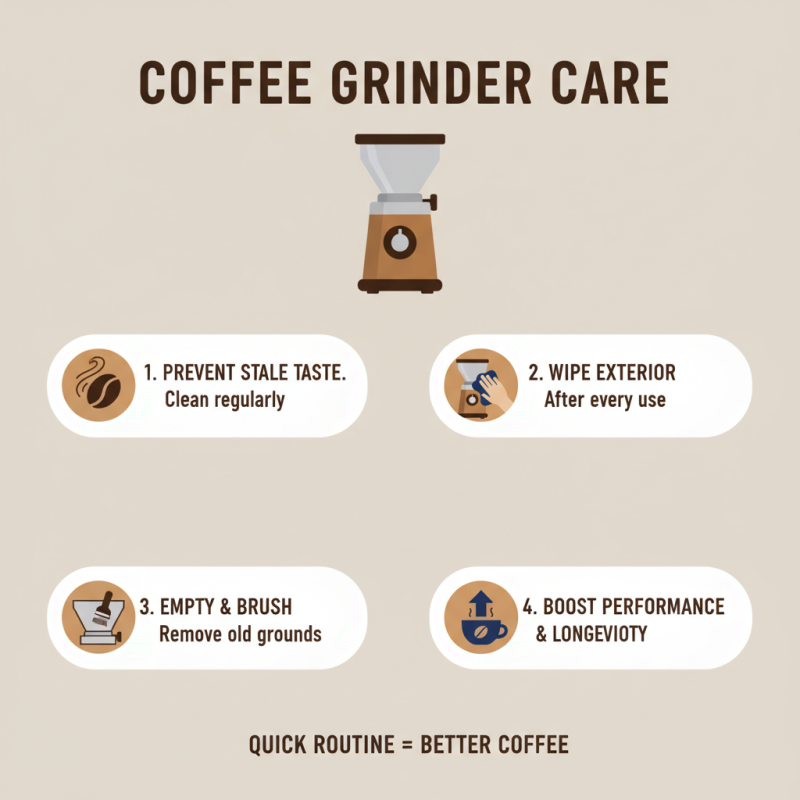
Maintaining a coffee grinder is essential for longevity and performance. Regular cleaning prevents old coffee residue from affecting taste. Wipe the exterior after every use. Empty the hopper and brush away leftover grounds. This quick routine makes a big difference.

Every few weeks, conduct a deeper clean. Disassemble the grinder and clean the burrs with a soft brush. This helps remove oils that accumulate over time. If you notice sluggish grinding, it might be time for this. Inspect all parts before reassembly. It’s easy to overlook small pieces.

Storing your grinder is just as vital. Keep it in a cool, dry place away from humidity. Moisture can lead to rust and clogs. Avoid storing it with coffee beans inside. This can cause stale flavors. Remember, small changes create a significant impact on your grinder’s life.