Leave Your Message

How to Find the Best Commercial Coffee Grinder from China?

Choosing the best Commercial Coffee Grinder from China requires more than comparing motor power and price. It demands evidence, practical testing, and careful supplier evaluation. The International Coffee Organization reported global coffee consumption at approximately 177.9 million 60-kilogram bags in 2023/24. That scale creates intense pressure on cafés, hotels, roasters, and restaurants to improve grinding speed and consistency.

Demand is also becoming more quality-focused. The National Coffee Association’s Spring 2024 National Coffee Data Trends report found that 67% of American adults drank coffee during the previous day. Specialty coffee consumption reached 57% during the previous week. Every grind matters. Uneven particles can produce a bitter espresso, a weak filter brew, or wasted beans.

Scott Rao, author of The Professional Barista’s Handbook, has stated, “The grinder is the most important piece of equipment in a coffee shop.” His point remains practical. A powerful machine is not automatically a good investment. Burr geometry, thermal stability, dosing accuracy, retention, noise, and service access deserve equal attention. The Specialty Coffee Association’s technical guidance also highlights particle-size distribution and repeatability as important quality factors.

Chinese manufacturers offer broad choices, from compact shop grinders to high-volume models with cooling systems and programmable dosing. Yet specifications can look better than real performance. Ask for grind samples, duty-cycle data, burr-life estimates, food-contact certifications, and videos of the machine under load. Visit the factory when possible.

The evaluation will not be perfect. Supplier data may be incomplete, and shipping conditions can change the final cost. Still, a structured comparison can reduce expensive mistakes and identify a Commercial Coffee Grinder that fits real operating conditions.
How to Find the Best Commercial Coffee Grinder from China?

Define Your Commercial Coffee Grinding Requirements

Before comparing a commercial coffee grinder from China, define the work it must perform. A busy café may need eight kilograms per hour, while a small hotel may need far less. Estimate cups per day, peak service periods, and the number of grind settings required. Do not rely on a seller’s maximum capacity alone. It may describe ideal conditions, not a crowded morning.

Specify the brewing methods your team uses, such as espresso, filter coffee, or French press. Each method demands a different particle range and adjustment system. Ask for burr size, burr material, motor speed, dosing accuracy, and expected retention. Noise matters too. A loud grinder can disturb guests in an open bar. In my equipment evaluations, workflow often matters more than a dramatic capacity figure. Staff should fill, adjust, dose, and clean it without awkward movements.

Write down electrical requirements, counter space, hopper size, and cleaning access before requesting quotations. Confirm test procedures, spare parts availability, manuals, and response times. Request sample grinding results using your intended beans, not generic beans. Results can change with roast level and humidity. I once underestimated cleaning time, and that mistake affected daily output. Your specification may still change after testing. That is normal. A careful buyer leaves room for evidence, maintenance, and honest revision.
Compare Grinder Types, Features, and Capacity

How to Find the Best Commercial Coffee Grinder from China?

Compare Grinder Types, Features, and Capacity

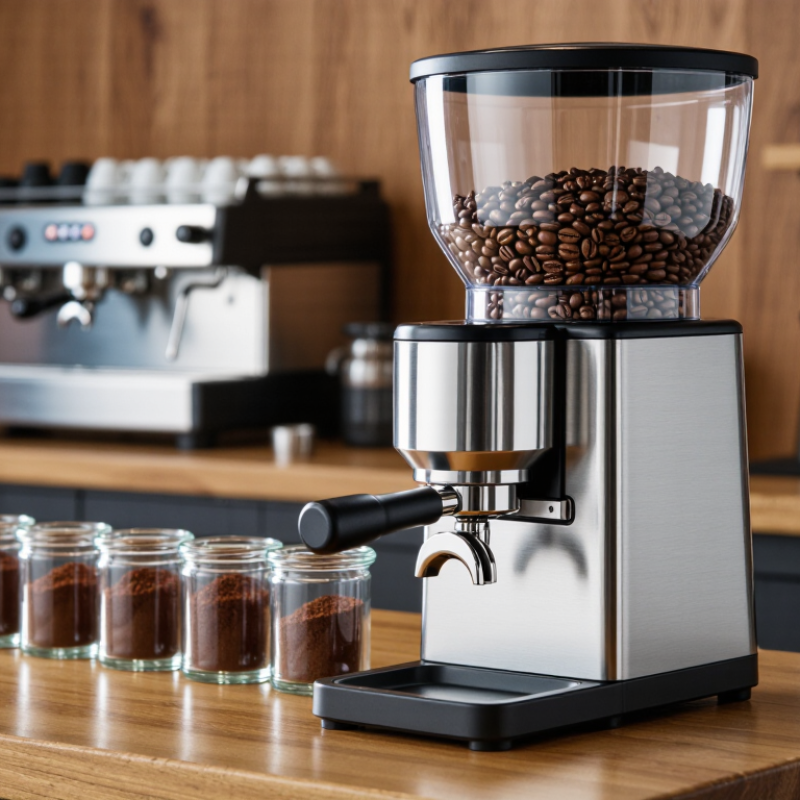
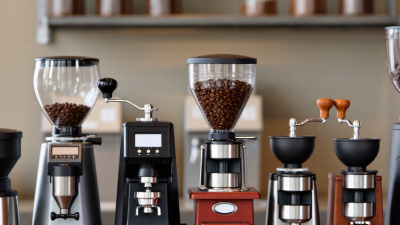
Commercial coffee grinders from China come in several useful designs. Flat burr grinders often provide consistent particles for espresso. Conical burr grinders usually produce less heat during slower grinding. Roller grinders suit high-volume operations, but they require more space and careful setup. Blade grinders are rarely suitable for professional coffee service because their results vary widely.

During equipment checks, I compare burr diameter, motor power, grind adjustment, and dosing accuracy. A larger burr can improve speed, but it may increase cost and energy use. Stepless adjustment supports precise espresso control. Timed dosing saves labor, although the timer may need regular calibration. Low-retention chambers reduce wasted coffee between orders. Cooling systems also matter during busy periods.

Capacity should match real demand, not an imagined peak. A small café may need a 1.5-kilogram hopper and moderate hourly output. A busy restaurant may require a larger hopper, stronger motor, and faster recovery. Oversized hoppers can expose beans to air for too long. That is easy to overlook. Ask suppliers for measured output, noise data, voltage options, spare-part availability, and cleaning instructions. Request sample testing with your own beans. Supplier claims are useful, but practical testing is more reliable. I would also inspect burr alignment and packaging before shipment. A lower price can become expensive when parts, training, or service support are missing.

How to Find the Best Commercial Coffee Grinder from China? - Compare Grinder Types, Features, and Capacity

Grinder Type Best Commercial Use Typical Burr Size Recommended Daily Output Hopper or Dose Capacity Grinding Range Important Features and Selection Notes
On-Demand Espresso Grinder Cafés, restaurants, hotels, and specialty coffee bars Ø 55–75 mm flat or conical burrs Approximately 5–15 kg of coffee Hopper: 1–2 kg
Single dose: 18–22 g
Fine espresso to medium-fine brewing Choose programmable dosing, low retention, stepless adjustment, a portafilter holder, and strong heat management. Suitable when freshness and dose consistency are priorities.
High-Volume Espresso Grinder Busy cafés, chain outlets, and locations with continuous espresso service Ø 75–98 mm flat burrs Approximately 15–30 kg of coffee Hopper: 1.5–3 kg
Single dose: 18–22 g
Fine espresso with rapid adjustment capability Look for a powerful motor, commercial-duty burrs, active or improved cooling, serviceable internal parts, dose counters, and overload protection. A larger burr set generally supports faster grinding, but motor design and cooling are equally important.
Bulk Drip Coffee Grinder Restaurants, offices, catering operations, and batch-brew stations Ø 64–83 mm flat or conical burrs Approximately 10–30 kg of coffee Hopper: 1–2.5 kg
Container: 250–1,000 g
Medium-coarse to coarse Prioritize high throughput, repeatable timed dosing, a large grounds container, easy cleaning, and a grind-size range suitable for filter coffee. Confirm compatibility with the required brew baskets or paper filters.
Shop and Retail Grinder Coffee shops selling freshly ground coffee for home brewing Ø 64–98 mm flat or conical burrs Approximately 20–60 kg of coffee Hopper: 1.5–3 kg
Bag filling: 250 g–1 kg
Fine to coarse, depending on burr and adjustment system Useful features include bag supports, adjustable dosing by weight or time, low static, low retention, cooling airflow, and a simple interface. The grinder should maintain a consistent particle size across repeated retail orders.
Single-Dose Commercial Grinder Specialty cafés offering multiple coffees or frequent bean changes Ø 64–83 mm flat or conical burrs Approximately 3–15 kg of coffee Usually 30–100 g input per dose Fine espresso to coarse filter coffee Choose low-retention design, bellows or purge control, a calibrated timer or scale, easy burr access, and minimal exchange between coffees. It reduces hopper aging but may require more frequent operator loading.
Bulk Brewing and Canteen Grinder Large offices, hospitals, universities, hotels, and institutional kitchens Ø 64–83 mm flat or conical burrs Approximately 20–50 kg of coffee Hopper: 2–5 kg
Container: 500 g–2 kg
Medium to coarse filter settings Focus on large hopper capacity, reliable continuous operation, simple controls, easy-access cleaning, overload protection, and a stable output temperature. A larger container reduces operator interruptions during peak periods.
Shop-Style Specialty Grinder Manual brew bars, cupping rooms, and premium coffee service Ø 64–83 mm flat or conical burrs Approximately 3–12 kg of coffee Hopper: 250 g–1.5 kg
Single dose: 15–60 g
Medium-fine to coarse filter settings Important factors are fine adjustment control, low retention, repeatability, quiet operation, and easy calibration. Burr alignment and particle-size consistency can be more important than maximum hourly capacity.
Multi-Purpose Commercial Grinder Businesses serving espresso, filter coffee, and occasional coarse grinding Ø 64–83 mm flat or conical burrs Approximately 8–20 kg of coffee Hopper: 1–2 kg
Single dose: 18–60 g
Fine espresso to coarse brewing Verify that the adjustment mechanism can return accurately to previous settings. A broad grind range is useful, but switching between very different settings may increase retention and require purging.

Capacity figures are practical planning ranges rather than universal limits. Actual performance depends on bean density, roast level, grind size, duty cycle, ambient temperature, burr geometry, motor power, and the manufacturer’s rated operating instructions. Before purchasing from China, request testing with your own coffee beans and confirm voltage, frequency, plug type, certifications, spare-burr availability, warranty terms, and after-sales support.

Evaluate Chinese Manufacturers and Product Quality

Evaluating a Chinese commercial coffee grinder starts with the manufacturer, not a polished product page. Ask how long the factory has produced grinders and which markets it serves. Request a factory address, production photos, and a video call with the quality team. A reliable manufacturer should explain motor sourcing, burr materials, assembly controls, and final inspection procedures. Ask for test records covering burr alignment, noise, heat, and grind consistency. One sample is not enough.

Test several units from different production batches. Weigh ten doses and compare their output, retention, and particle consistency. Run the grinder during a busy service period, not only for a short demonstration. Check whether the adjustment collar moves smoothly and remains stable after repeated use. Listen for unusual vibration. Inspect the hopper, switches, screws, and internal wiring. Small details often reveal weak quality control.

I once judged a grinder mainly by its attractive casing and low quotation. That was a mistake. The machine looked professional but produced uneven grounds after extended use. Now, I request an independent electrical and material compliance report when necessary. I also confirm warranty terms, spare burr availability, repair training, and response times in writing. Clear technical documents matter. Poor translation can still cause confusion, so ask precise questions and record every answer. A factory may pass one inspection and still need closer monitoring. Quality should be verified repeatedly, not assumed.

Verify Certifications, Customization, and After-Sales Support

How to Find the Best Commercial Coffee Grinder from China?

Verify certifications before comparing prices. The International Coffee Organization reported global coffee consumption of about 177 million 60-kilogram bags in 2023/24. That scale increases pressure on cafés, hotels, and distributors to maintain consistent grinding. Request the certificate number, issuing body, covered model, voltage, and production address. CE may support European market access, while North American buyers may need applicable electrical safety evidence. RoHS, EMC, food-contact documents, and ISO 9001 records can also matter. A certificate can still be wrong for your exact model. Check it independently.

Customization should improve daily work, not merely appearance. Ask for burr material, burr diameter, grind range, hopper capacity, dosing method, noise limits, and regional voltage. Request a sample using your own beans. Measure retention, dose variation, heat, and adjustment repeatability. The Specialty Coffee Association links grind distribution with extraction quality, but supplier claims remain incomplete without testing. Small details matter. A difficult dial becomes expensive labor. I would test twice, not trust one impressive sample.

After-sales support deserves equal attention. Industry surveys from the National Coffee Association consistently show coffee remains a frequent daily beverage in the United States, keeping equipment downtime commercially painful. Confirm warranty length, spare-part availability, repair training, response times, and remote diagnosis. Ask whether burrs, switches, and control boards can be replaced separately. Some suppliers promise “lifetime support” without defining it. That wording is weak. Put service duties, delivery times, and escalation contacts into the contract. A cheaper grinder may become costly when one missing part stops a busy bar.

How to Find the Best Commercial Coffee Grinder from China?

A practical procurement scorecard for verifying certifications, customization capability, and after-sales support.

The suggested weighting prioritizes verifiable compliance and long-term operational support. Request original certificates, test reports, production samples, customization specifications, spare-parts terms, and written warranty conditions before placing an order.

Assess Pricing, Shipping, and Supplier Reliability

A competitive factory quote is not the final price. Ask for a landed-cost sheet covering the grinder, packaging, inspection, insurance, freight, duties, and destination delivery. The World Bank’s Logistics Performance Index 2023 surveyed 4,090 logistics professionals across 139 economies. Its findings show that customs, infrastructure, and shipment timeliness strongly affect supply-chain performance. Use these indicators when comparing suppliers, not only unit prices. A low quotation can become expensive after port handling and unexpected documentation fees.

Shipping details deserve practical testing. Request carton dimensions, gross weight, pallet information, production lead time, and the planned transport route. Drewry’s World Container Index tracks weekly container prices across eight major routes, showing why freight estimates can change quickly. Ask suppliers to state the quote’s validity period. Confirm whether the grinder supports your local voltage and frequency before production. One overlooked specification can create costly rework. It happens.

Supplier reliability needs evidence. Request recent inspection records, batch photos, spare-parts lists, and a clear response-time commitment. The International Trade Centre’s SME Competitiveness Outlook repeatedly highlights logistics and quality management as important factors in international trade performance. Contact two previous commercial buyers, if permission is available, and ask about late shipments, replacement parts, and communication during problems. A video call can reveal useful details, such as inconsistent burr alignment or weak carton protection. However, online impressions are not proof.

I would still order a paid sample, measure grind consistency, and use third-party pre-shipment inspection. Supplier evaluation is never perfectly clean; leaving a small uncertainty budget is wiser than pretending every risk is visible.