Leave Your Message

China Best Professional Coffee Grinder Manufacturer?

Choosing the China Best Professional Coffee Grinder Manufacturer requires more than comparing prices, motor power, or polished factory photographs. Buyers need evidence that the grinder performs consistently in real working conditions. A reliable manufacturer should show burr geometry, grinding-speed data, particle-distribution results, and clear quality-control procedures. Product claims alone are not enough.

James Hoffmann, a respected coffee educator and author, has said, “The grinder is the most important piece of equipment in your coffee setup.” His point remains practical. A café grinder must produce a stable grind during busy service, from the first espresso shot to the hundredth. It should offer precise adjustment, low retention, manageable heat, and durable burrs. Small details matter. Alignment matters. Cleaning access matters.

This introduction examines how to identify a genuinely professional Chinese supplier, not merely an attractive exporter. It considers factory experience, engineering capability, OEM and ODM support, material selection, motor performance, and after-sales service. It also looks at testing methods that buyers can verify before placing large orders. A serious Professional Coffee Grinder manufacturer should welcome sample testing, transparent specifications, and independent inspection. Some suppliers may provide impressive laboratory figures but limited field evidence. That gap deserves attention.

The strongest choice may not be the cheapest quotation. It may be the supplier that explains weaknesses honestly, improves prototypes, and supports replacement parts for years. Mistakes still happen, even in experienced factories. What matters is whether the manufacturer measures them, reports them, and corrects them.
China Best Professional Coffee Grinder Manufacturer?

What Defines a Professional Coffee Grinder Manufacturer in China?

China Best Professional Coffee Grinder Manufacturer?

What Defines a Professional Coffee Grinder Manufacturer in China?

Professional coffee grinder manufacturing is more than machining a shiny metal body. China’s strongest suppliers combine engineering control, repeatable production, and honest testing. Market pressure is real. The USDA Foreign Agricultural Service’s Coffee: World Markets and Trade report, June 2024, forecast global coffee production at approximately 176 million 60-kilogram bags for 2024/25. The ICO Coffee Report and Outlook, April 2024, placed annual consumption near 177 million bags. High volume creates little tolerance for inconsistent grinding.

A capable manufacturer should document burr geometry, motor speed, thermal behavior, and particle distribution. SCA coffee standards emphasize measurable brewing variables, including grind size and extraction control. Factory audits should include calibration records, incoming-material checks, and repeated tests after long operation. Ask for retention data, not attractive sample photos. A grinder that performs well for ten minutes may struggle after two hours.

Look closely.

Professional work also appears in small details: numbered components, stable adjustment steps, low-noise bearings, and accessible replacement parts. Export experience should include electrical safety files, traceability, packaging tests, and responsive technical support. Certifications alone are not enough. Some factories pass paperwork checks but lack reliable after-sales systems. That weakness deserves honest attention. A professional manufacturer should admit test limits, explain tolerances, and improve after field feedback. No factory is perfect. The better question is whether its process can detect failure before the customer does.

How China’s Coffee Grinder Manufacturers Design and Produce Their Equipment

China’s coffee grinder manufacturers typically begin with the grinding task, not the outer housing. They study bean hardness, roast level, target dose, and expected daily workload. Engineers then select burr diameter, motor power, gear structure, and adjustment range. A café grinder may need fast output, while a home unit needs quieter operation. Small details matter. A 0.1-millimeter alignment error can affect particle consistency.

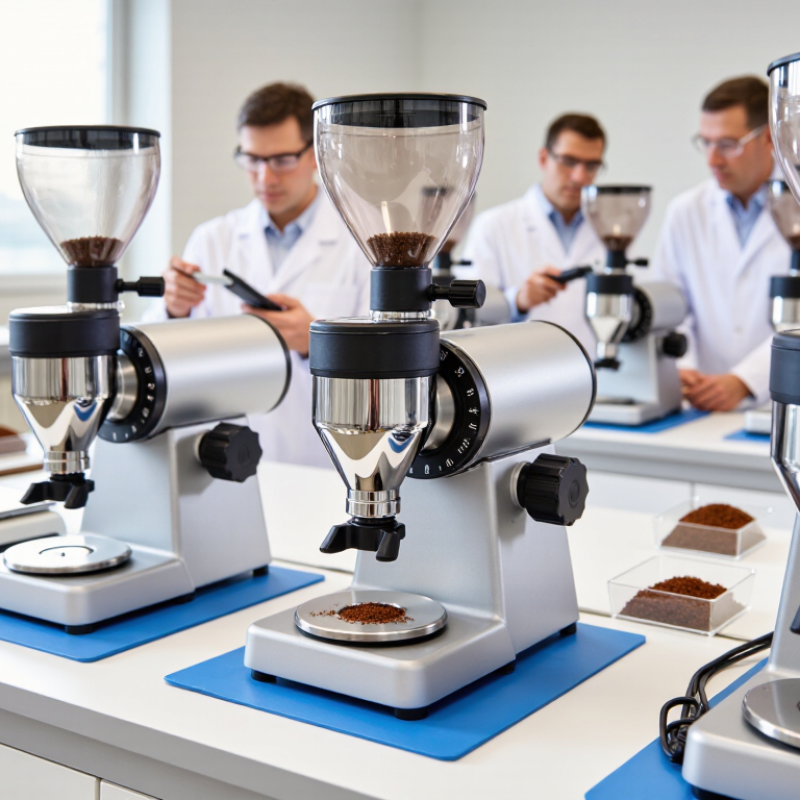
During production, technical drawings guide machining and assembly. CNC equipment shapes metal burr carriers and mounting parts with controlled tolerances. Workers inspect surfaces, threads, switches, and electrical connections at different stages. Assemblers also check burr parallelism before closing the grinding chamber. Test beans pass through each finished unit. Technicians measure retention, heat buildup, noise, and dose repeatability. These records create useful traceability.

Reliable manufacturers usually test several samples, not just one attractive prototype. They may run continuous cycles to expose motor weakness or unstable calibration. Yet no design is perfect. A rushed sample can hide vibration that appears after repeated use. Some factories also revise cooling paths after field feedback, which shows practical engineering rather than perfect planning. Buyers should review inspection reports, material specifications, safety testing, and replacement-part procedures. Clear communication is important when custom colors or controls change the original design. A professional coffee grinder manufacturer must balance precision, production speed, serviceability, and honest quality limits.

Which Features Distinguish High-Quality Commercial Coffee Grinders?

High-quality commercial coffee grinders begin with consistency, not impressive housing. The SCA recommends repeatable particle distribution for balanced extraction, while the NCA’s Fall 2024 National Coffee Data Trends report found that 67% of American adults drank coffee the previous day. Busy cafés need grinders that protect flavor during repeated service. Large, precisely aligned burrs produce fewer fines and reduce uneven extraction. Stepped or stepless adjustment should respond clearly to small changes. It should not feel loose.

Heat control matters, especially during morning rushes. Low-retention grinding chambers help prevent stale grounds from mixing with fresh coffee. A commercial unit should also provide accurate dosing, stable motor performance, and a hopper that supports continuous workflow. The International Coffee Organization reported global coffee consumption of about 177.9 million 60-kilogram bags in 2022/23. That scale reflects why reliability is not a minor specification. It is daily operating insurance.

Build quality requires closer inspection. Stainless steel burr carriers, strong bearings, accessible cleaning points, and replaceable wear parts can reduce long-term downtime. Safety interlocks and overload protection are essential, although many product pages explain them poorly. My practical concern is simple: a grinder may perform well in testing but struggle in a humid café. Noise, clumping, retention, and service access should be measured on site. Perfect specifications can still disappoint.

Which Features Distinguish High-Quality Commercial Coffee Grinders?

Reference benchmarks for professional commercial grinders, based on commonly specified performance requirements.

High-quality commercial grinders typically combine large burrs for thermal stability, powerful motors for continuous operation, adequate hopper capacity, precise grind adjustment, and low coffee retention. The figures shown are practical reference values rather than data from any specific company or brand.

How to Evaluate a Chinese Coffee Grinder Manufacturer for Your Business

China Best Professional Coffee Grinder Manufacturer?

How to Evaluate a Chinese Coffee Grinder Manufacturer for Your Business

Choosing a Chinese coffee grinder manufacturer requires more than comparing prices. Inspect the factory’s production line, testing equipment, and quality control records. Ask how burr alignment, motor temperature, and grind consistency are measured. A professional supplier should explain these points clearly, using test data rather than broad promises.

Request several samples from different production batches. Test espresso, pour-over, and coarse settings with the same coffee beans. Check particle consistency, retention, noise, vibration, and adjustment accuracy. Small details matter. A loose dial or overheated motor can create daily complaints. Confirm the burr material, motor specifications, warranty terms, minimum order quantity, and expected lead time. Review available compliance documents for your target market.

I once judged a grinder by its solid metal housing and attractive finish. That was a mistake. After repeated use, the adjustment became less precise than expected. This experience taught me to value measurable performance over appearance. Ask whether the manufacturer supports pilot orders, replacement parts, inspection reports, and technical training. Reliable communication also matters when defects appear. A trustworthy team will admit limitations and explain corrective actions. Do not rely on one successful sample. Track performance after extended use, because real café conditions are harder than a showroom test.

China Best Professional Coffee Grinder Manufacturer? - How to Evaluate a Chinese Coffee Grinder Manufacturer for Your Business

Evaluation Area Key Dimension Practical Benchmark for Business Buyers Suggested Weight
Product Capability Grind Adjustment and Application Range The grinder should support the intended application, such as espresso, filter coffee, French press, or commercial batch brewing. A stepless or fine-step adjustment system is generally preferred for espresso-focused products. Product specification sheet, adjustment mechanism description, particle-size test results, and samples covering the required brewing methods. 10%
Product Capability Burr Material and Geometry Commercial-oriented grinders commonly use hardened steel or ceramic burrs. Burr diameter, cutting geometry, coating, and replacement availability should match the expected workload. Burr material declaration, technical drawings, hardness or wear information, replacement-burr pricing, and service-life test records. 10%
Product Capability Grinding Consistency and Retention Evaluate consistency using repeatable dose tests rather than marketing claims. For each test, record input weight, output weight, grind setting, particle distribution, and residual coffee retained inside the grinder. Third-party or factory test report, repeatability data from at least three runs, retained-coffee measurement, and independently tested production samples. 15%
Product Capability Motor, Duty Cycle, and Thermal Control The motor rating and duty cycle should be suitable for the expected daily workload. For commercial use, verify continuous or intermittent operating limits, overload protection, and heat management instead of relying only on wattage. Motor datasheet, duty-cycle specification, overload-protection test, temperature-rise test, and performance results after repeated grinding cycles. 12%
Manufacturing Quality Quality Management System A documented quality system with incoming inspection, in-process checks, final inspection, corrective-action procedures, and traceability is a strong indicator of production control. ISO 9001 certification may support verification but does not replace product testing. Valid certificate with scope and expiry date, quality manual excerpts, inspection forms, nonconformance records, and an online or on-site factory audit. 12%
Compliance Electrical and Product Safety Compliance Compliance requirements depend on the destination market. Common export requirements may include CE-related documentation for the European Economic Area, UKCA for the United Kingdom, or applicable North American certification requirements. Test reports, declarations of conformity, safety reports, EMC results, model numbers, production-site information, and documents issued by an identifiable testing body. 10%
Compliance Materials and Food-Contact Safety Any component that may contact coffee should be made from suitable, traceable materials. For relevant markets, request documentation for food-contact materials and restricted substances, such as applicable RoHS or food-contact declarations. Material declarations, supplier certificates, migration or food-contact test reports where applicable, RoHS documentation, and a component material list. 8%
Supply Chain Production Capacity and Scalability Capacity should be assessed against the buyer's forecast, seasonality, and required delivery frequency. A supplier should demonstrate how it manages bottlenecks involving motors, burrs, electronics, packaging, and final assembly. Monthly capacity statement, production-line photos or audit access, capacity-loading plan, component lead times, and records from comparable production runs without disclosing customer names. 8%
Supply Chain MOQ, Sample Policy, and Lead Time Compare sample lead time, pilot-order MOQ, mass-production MOQ, tooling charges, and standard production lead time. All commercial conditions should be stated in writing before approval. Formal quotation, sample invoice, production schedule, tooling agreement, packaging requirements, and written confirmation of lead-time assumptions. 7%
Customization OEM and ODM Capability A capable partner should distinguish between simple private-label work and genuine product development. Evaluate mechanical design, electrical adaptation, firmware or controls, packaging, documentation, and engineering change management. Anonymized development timeline, engineering change records, prototype samples, 2D or 3D drawings, packaging mockups, and ownership terms for custom tooling. 6%
Commercial Terms Total Cost of Ownership Assess unit price together with tooling, packaging, freight, import duties, spare parts, warranty claims, maintenance, replacement burrs, and expected service life. The lowest quoted unit price may not be the lowest total cost. Itemized quotation, spare-parts price list, packaging dimensions, estimated shipping data, warranty-cost policy, and a three-year operating-cost model. 6%
After-Sales Support Warranty, Spare Parts, and Technical Service The contract should define warranty duration, covered components, exclusions, response time, replacement procedures, spare-parts availability, and technical-document access. A practical spare-parts plan is essential for commercial equipment. Warranty terms, service-level agreement, exploded parts diagram, troubleshooting guide, spare-parts stock policy, and sample support response. 6%
Verification Factory Audit and Pre-Shipment Inspection Use a documented inspection plan covering appearance, dimensions, electrical safety, noise, grinding performance, packaging, labels, and accessories. Inspection criteria should be agreed before production. Factory audit checklist, approved golden sample, inspection standard, acceptance criteria, corrective-action process, and pre-shipment inspection report. 5%
Risk Control Business Continuity and Traceability The supplier should be able to trace key components and finished products by batch or serial number and explain how it handles component shortages, quality incidents, recalls, and engineering changes. Batch or serial-number format, traceability sample, backup-supplier policy, recall procedure, change-notification process, and business-continuity plan. 5%
Recommended scoring method: Score each dimension from 1 to 5, multiply the score by the suggested weight, and compare at least three qualified manufacturers using the same samples, specifications, and inspection criteria. Certificates and test reports should be checked for the correct model, manufacturer, testing scope, and validity period.

What Applications and Markets Do Chinese Professional Grinders Serve?

Chinese professional coffee grinders are built for more than busy cafés. In mainland cafés, hotel breakfast rooms, bakeries, and training labs, they handle repeated grinding throughout the day. Flat and conical burr systems support different recipes, from espresso to filter coffee. Some models offer timed dosing, stepless adjustment, cooling paths, and programmable portions. These details matter when baristas move between dark roasts and lighter specialty beans. In practical testing, consistency matters more than a bright specification sheet. A grinder that stays stable after two hundred doses earns trust. Noise still deserves attention. A quiet machine improves communication at the counter.

Their market reach extends across Southeast Asia, the Middle East, Europe, North America, and emerging coffee regions. Distributors often choose equipment for cafés, restaurants, mobile carts, roasters, offices, and supermarket sampling stations. Different markets expect different electrical standards, languages, warranties, and safety documentation. Reliable manufacturers should provide traceable components, burr replacement guidance, test records, and responsive technical support. Yet “professional” is not a universal label. A compact grinder may suit a small pastry shop but struggle in a high-volume bar. I have seen buyers focus on motor power and overlook retention, cleaning time, and service access. That mistake becomes expensive. Honest evaluation requires real beans, realistic workloads, and local service planning before large orders.