China Top 10 Electric Coffee Grinder Manufacturers?
China has become a significant manufacturing base for coffee equipment, including the Electric Coffee Grinder segment. Its factories combine motor production, plastic molding, electronic control systems, and export experience. However, factory quantity does not automatically mean dependable performance.
Industry reports from Grand View Research and IMARC Group describe steady growth in the global coffee machine and grinder markets. Their findings connect this expansion with home brewing, specialty coffee, convenience, and rising disposable income. Market estimates differ between reports, though. That difference deserves attention before accepting any forecast as fact.
Coffee educator and grinder specialist Scott Rao has said, “Grind size is the most important variable in coffee brewing.” His point is practical. A grinder should produce consistent particles, not merely operate quickly. Burr geometry, motor stability, heat control, adjustment range, retention, and after-sales support matter more than a polished product photograph.
This guide examines China’s top 10 Electric Coffee Grinder manufacturers through a buyer-focused lens. The evaluation considers manufacturing capability, product range, certifications, export history, customization, and quality control. It also considers details buyers can inspect: burr alignment, dose repeatability, noise levels, and cleaning access.
Some rankings remain subjective. Public factory data can be incomplete. That is the uncomfortable part. Supplier claims need independent verification, samples, audits, and long-term user feedback. A low quotation may hide weaker burrs, unstable electronics, or limited spare parts. The strongest manufacturers are not always the largest. They are the companies that repeatedly deliver measurable results.
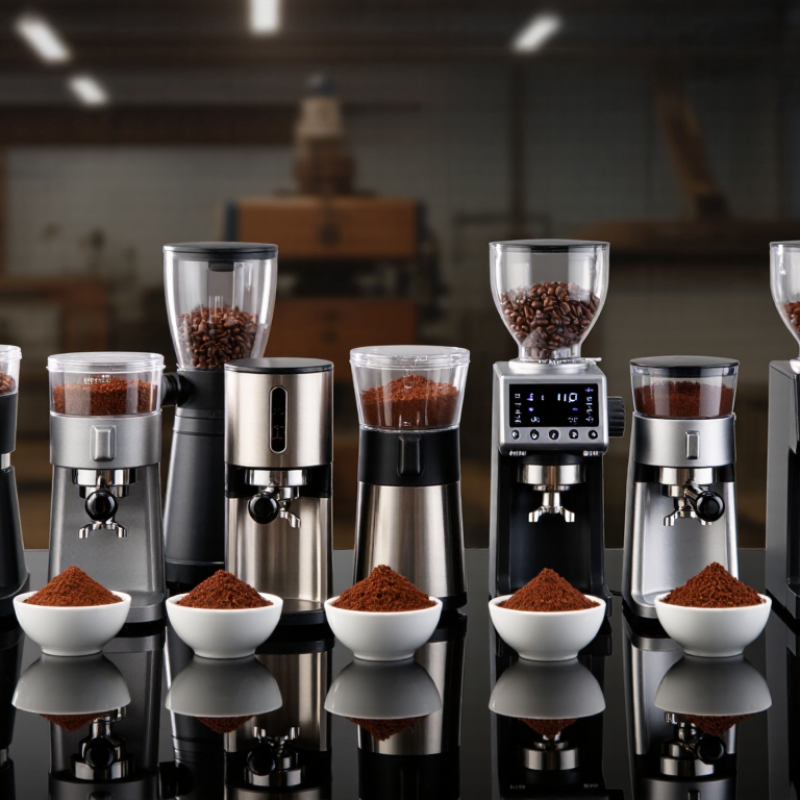
What Defines a Leading Electric Coffee Grinder Manufacturer in China
A leading electric coffee grinder manufacturer in China is defined by more than production capacity. It must understand how grind size, heat, and motor speed affect extraction. Experienced engineers test these factors with calibrated equipment and real coffee beans. They examine particle distribution, noise, temperature rise, and retention after repeated use. Small details matter.
Reliable manufacturers control each stage, from burr machining to final assembly. They use documented inspection points for motors, switches, wiring, and housing alignment. Batch records make defects easier to trace. Safety testing should cover insulation, overheating, grounding, and applicable export requirements. Clear technical files also help buyers verify claims instead of trusting attractive samples.
Consistency separates a capable supplier from a temporary workshop. A serious factory can explain its quality process, testing limits, replacement policy, and production lead times. It should provide samples from regular production, not only specially prepared units. Factory audits and independent test reports add useful evidence. Still, no manufacturer is flawless. Burr wear, shipping damage, or a noisy motor can appear unexpectedly. Honest suppliers report these risks and improve their process. They listen to feedback from cafés, distributors, and repair teams. That practical experience often reveals weaknesses that laboratory testing misses. Custom colors are easy; stable performance is harder. Reliable communication matters just as much.
What Defines a Leading Electric Coffee Grinder Manufacturer in China?
Reference purchasing-weight model for evaluating manufacturers, excluding company and brand data
Grind consistency and motor durability receive the highest weights because they directly affect cup quality, operating life, and customer returns. Food-contact material safety, quality-control traceability, OEM/ODM capability, export compliance, and after-sales support are also important indicators when selecting an electric coffee grinder manufacturing partner.
China’s Top 10 Electric Coffee Grinder Manufacturers
China’s top 10 electric coffee grinder manufacturers are not identical in strength. Some focus on home grinders, while others produce commercial equipment. A practical evaluation should examine motor stability, burr alignment, noise control, and daily output. I would also review factory experience, production capacity, and after-sales support. Evidence matters more than polished factory photos.
The stronger manufacturers usually provide sample testing, assembly records, and clear quality procedures. Their grinders should deliver consistent particle sizes, even after repeated use. Stainless steel or hardened burrs can improve durability, but material claims require verification. Buyers should request reports for electrical safety, electromagnetic compatibility, and food-contact materials. These documents help confirm compliance with the destination market’s requirements.
Small details often reveal manufacturing discipline. Check the switch response, cable strain relief, hopper fit, and cleaning access. A grinder may look excellent but produce uneven grounds under heat. That weakness can appear only after weeks of use. My own assessment would not rely on one sample, either. Testing several units from one production batch gives a more realistic view. Not every factory communicates problems openly. Ask about rejected parts, repair rates, and replacement timelines. Some manufacturers offer impressive customization, yet frequent changes may increase defects. The best choice depends on consistent testing, transparent communication, and documented production control.
Core Products, Grinding Technologies, and Manufacturing Strengths
China’s top ten electric coffee grinder manufacturers differ in focus, scale, and technical depth. Their core products include home grinders, commercial dosing models, portable units, and integrated coffee machines. Many offer conical or flat burr systems, with sizes ranging from compact household sets to heavy-duty café equipment.
Burr geometry is a major performance factor. Hardened steel burrs suit broad daily use, while coated or precision-machined burrs can improve consistency. Brushless motors support smoother operation and longer service life. Some factories add stepless adjustment, timed dosing, low-retention chambers, and overload protection. These features sound impressive. Actual results still depend on alignment, heat control, and calibration.
Manufacturing strength often appears inside the factory, not in product photos. Leading suppliers commonly use CNC machining, automated assembly, torque testing, and particle-size checks. Traceable components make quality problems easier to investigate. Export experience also matters, especially for documentation, electrical safety, and after-sales parts. In supplier audits, I would inspect burr flatness, motor noise, powder retention, and test records. A polished sample is not enough. Some published specifications remain incomplete, and production batches may vary slightly. Buyers should request recent inspection data, spare-part plans, and realistic output tests before judging the ten manufacturers.
How to Compare and Select the Right Chinese Manufacturer
When comparing China’s top 10 electric coffee grinder manufacturers, start with the factory, not the catalog. A polished website proves little. Request a video tour, production photos, and a live product demonstration. Check whether the facility makes grinders or only assembles imported parts. Ask about burr material, motor power, grinding range, noise levels, and heat control. These details affect cup quality and customer returns.
Order samples from three or four shortlisted manufacturers. Test them with light, medium, and dark roasted beans. Record grinding time, particle consistency, retention, vibration, and cleaning effort. Small differences become obvious after repeated use. Review inspection records and ask how the factory handles defective motors, damaged burrs, and unstable switches. A reliable supplier should explain its quality checkpoints clearly. Vague answers deserve caution.
Compare minimum order quantities, tooling charges, packaging options, lead times, and payment terms in one spreadsheet. Confirm whether replacement parts remain available after production ends. Ask for relevant safety and electrical compliance documents for your target market, then verify their scope and validity. I have found that the cheapest quotation often hides weaker testing or slower support. Still, even experienced buyers can miss a detail. A written specification, approved sample, and pre-shipment inspection reduce that risk. Keep communication practical. Send drawings, tolerance requirements, label details, and acceptance standards before signing.