How to Choose the Best Coffee Grinder Coffee Maker?
A Coffee Grinder Coffee Maker promises a simpler morning: one machine, fresh grounds, and a hot cup without extra counter clutter. But convenience only matters if the coffee tastes good. Uneven grounds can leave one sip sharp and another dull. A machine that is difficult to clean may soon become an expensive decoration.
The National Coffee Association’s 2024 National Coffee Data Trends report found that 67% of U.S. adults had coffee in the past day, the highest share recorded since 2001. That figure shows how routine coffee is for many Americans, but it does not tell shoppers which machine to buy. Your brewing style, household size, budget, and tolerance for daily maintenance matter more than a popular feature list. Small details count. Check the grinder settings, brew capacity, cleaning steps, and whether replacement parts are available.
Coffee educator James Hoffmann has put the grinder’s role plainly: “The grinder is the most important piece of equipment in your coffee setup.” That guidance is useful, though it is not a promise that an expensive grinder fixes every weak cup. For this guide, we’ll compare burr and blade grinders, built-in and separate designs, and the trade-offs between speed and control. We’ll also look at noise, consistency, and cleanup—details that can be easy to overlook in product photos. There is no perfect choice for everyone. The best Coffee Grinder Coffee Maker is the one that suits your routine and makes coffee you genuinely enjoy.
Define Your Brew Style with the SCA’s 55 g/L Coffee-to-Water Benchmark
How to Choose the Best Coffee Grinder Coffee Maker?
Define Your Brew Style with the SCA’s 55 g/L Coffee-to-Water Benchmark
When choosing a coffee grinder and coffee maker, begin with the cup you enjoy, not a feature list. The Specialty Coffee Association’s 55 grams of coffee per liter of water is a useful brewing reference. For a 300-milliliter mug, that works out to about 16.5 grams of coffee. Weighing both ingredients makes comparisons more reliable than scooping by eye. Taste still decides. A finer grind can increase extraction, while a coarser grind often suits quicker flow.
Tips: Start near the grinder setting recommended for your brewing method, then adjust one step at a time. If coffee tastes sharp or thin, try a slightly finer grind; if it tastes harsh, try coarser. Record the coffee dose, water amount, and grind setting on a note beside the machine.
A drip-style brewer and a short immersion brew may respond differently, even at the same ratio. Use 55 g/L as a controlled starting point, then change one variable and taste again. Choose a grinder with repeatable adjustments and a maker that lets water contact the grounds evenly. Freshly ground coffee can lose aroma while sitting, so grind just before brewing when practical. I still misjudge a cup sometimes. A small notebook helps more than another guess.
How to Choose the Best Coffee Grinder Coffee Maker? - Define Your Brew Style with the SCA’s 55 g/L Coffee-to-Water Benchmark
| Brew Style |
Grinder Features to Look For |
Coffee Maker Features to Look For |
Typical Grind Guidance |
55 g/L Reference Dose |
Best Fit |
| Batch filter coffee |
Burr grinder with repeatable settings; a timer or dose control can make daily portions easier. |
Even water distribution and a brew basket sized for the amount you usually make. |
Medium; adjust finer or coarser to suit the brewer and taste. |
500 mL water: 27.5 g coffee
1,000 mL water: 55 g coffee |
A practical all-round choice for brewing multiple cups at once. |
| Pour-over |
Burr grinder with small, consistent adjustments for dialing in a single cup or a small batch. |
A manual dripper or brewer that allows control over pouring; a gooseneck kettle can help with pouring precision. |
Medium to medium-fine; the ideal setting depends on the dripper, filter, and pour technique. |
250 mL water: 13.75 g coffee
500 mL water: 27.5 g coffee |
For people who want more control over each brew. |
| French press |
Burr grinder with a dependable coarse setting; consistent particles can help limit excess sediment. |
A press with a capacity suited to the usual batch size and a mesh filter in good condition. |
Coarse; adjust to reduce excessive sediment or weak extraction. |
500 mL water: 27.5 g coffee
1,000 mL water: 55 g coffee |
For immersion brewing and serving several cups without paper filters. |
| Espresso |
Espresso-capable burr grinder with fine, precise adjustment; grind consistency and retention matter. |
An espresso machine with stable brewing temperature and pressure, plus a portafilter that matches the grinder’s workflow. |
Fine; small changes can noticeably affect shot flow and taste. |
Not calculated from the 55 g/L benchmark; espresso is brewed using a different beverage-to-coffee ratio. |
For concentrated coffee and a setup that supports careful dialing-in. |
|
Using the benchmark: 55 g of coffee per 1,000 mL of water equals 5.5 g per 100 mL. The doses shown are arithmetic examples based on that reference ratio for brewed coffee; taste, coffee, grinder, and brewing method can call for adjustments. Espresso is not represented by this water-based reference dose.
|
Compare Burr and Blade Grinders by Grind Uniformity and Particle Size
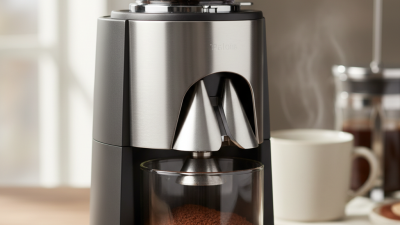
Burr grinders crush beans between two abrasive surfaces, producing a more controlled particle-size range. Blade grinders chop beans with a spinning blade, often leaving fine dust alongside visibly larger pieces.
That difference matters.
In a cup, the fines can extract quickly and taste harsh, while coarse fragments may taste thin or sour. Uniformity is not the only factor, but it is a useful buying test.
The Specialty Coffee Association’s Brewing Control Chart identifies 18–22% extraction yield as a commonly used target range for brewed coffee. A grinder cannot guarantee that result, yet more consistent particles make adjustments easier to repeat.
Try grinding the same beans and inspecting them on a white plate: burr-ground coffee should look more even, though home grinders vary. Not perfectly, though. A coarse setting may still show a broad spread, and brewing method changes what size works best.
For drip coffee, seek steady, medium particles; for immersion brewing, a somewhat coarser grind can help limit muddy sediment. Use taste as the final check, not appearance alone.
I’d treat particle uniformity as a strong clue, rather than a promise.
Match Grind Settings to Your Brew Method and Extraction Time
A coffee grinder coffee maker works best when its grind range suits your brewing method.
For drip coffee, start with a medium grind; for French press, try coarse. Espresso needs a fine, consistent grind. These are starting points, not laws. A filter basket that drains in two minutes may need a different setting from one that runs for four.
Match grind size to contact time.
Water passes quickly through espresso, while immersion brewing keeps grounds wet longer. If coffee tastes sharp and thin, extraction may be low; try grinding finer or extending contact slightly. If it tastes harsh or drying, go coarser or shorten the brew. Change one variable at a time. The Specialty Coffee Association’s brewing guidance places brewed coffee around 18–22% extraction yield and 1.15–1.35% total dissolved solids. Treat these as targets, not guarantees.
When choosing a machine, check for repeatable grinder steps and a range suited to your brewer.
Weigh the beans, brew the same dose, and note how long the basket drips. Then adjust one step and compare the cups. Small changes matter. Uneven pouring or stale beans can muddy the result, so the grinder is not the only suspect. Timing is less tidy than recipes suggest; real kitchen mornings rarely behave like lab tests.
Evaluate Burr Type, Grind Steps, Capacity, and Grounds Retention
Choose burr type by the cup you want, not by a universal ranking. Flat and conical burrs can both produce useful grounds; alignment, burr condition, and adjustment matter too. A practical test: brew the same coffee at two settings, then compare clarity and bitterness. Keep the dose constant. The Specialty Coffee Association’s Brewing Control Chart gives a useful reference:
55 grams of coffee per liter, 1.15–1.35% total dissolved solids, and 18–22% extraction yield.
These are guideposts, not guarantees. I would not treat a precise-looking display as proof of precision.
Grind steps should be small enough to correct a sour cup without jumping straight to bitterness. Check the adjustment while grinding, if the design allows it. Capacity should match your routine: a large hopper is convenient, but beans can sit unused. Grounds retention deserves a real test. Weigh the beans in, grind, then weigh the output; repeat after cleaning. Some grounds will cling inside. How much varies with coffee, humidity, and grinder design, so published capacity alone can mislead. A final detail: listen for clumps and inspect the grounds under bright light. Uneven particles are easy to miss when you are in a hurry.
Choose Between an All-in-One Machine and Separate Coffee Equipment
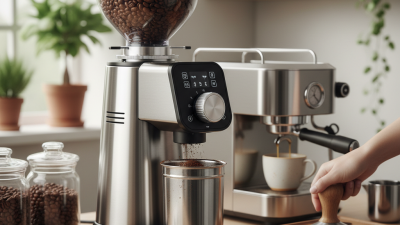
Choosing between an all-in-one coffee machine and separate equipment depends on your counter space, routine, and appetite for adjustment. In the United States, the National Coffee Association’s 2024 National Coffee Data Trends report found that 67% of adults drank coffee the previous day. If coffee is part of your daily routine, a built-in grinder can remove a step and keep the morning workflow tidy. Fewer parts on the counter. But convenience can come with limits: a worn grinder may require servicing the whole machine, and some built-in settings offer less room to fine-tune grind size.
Separate equipment takes more space, but it lets you replace or adjust the grinder without changing your brewer. That matters when one coffee tastes sharp and another turns bitter. The Specialty Coffee Association’s brewing control guidance places filter coffee around 18–22% extraction and 1.15–1.35% total dissolved solids; grind consistency helps you move toward those ranges, though water and dose matter too. A useful test is to check whether the grinder has clear adjustment steps and whether its parts are easy to clean. I would not assume separate always means better. If you rarely change beans, its extra setup may feel unnecessary.