What is a Flat Burr Grinder and How Does It Work?
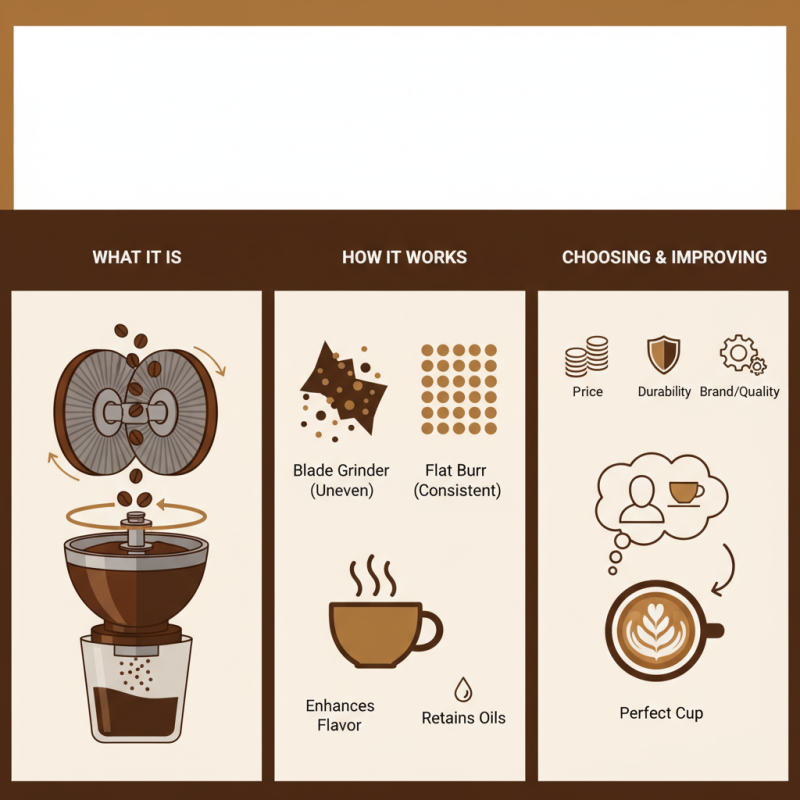
A Flat Burr Grinder is an essential tool for coffee enthusiasts. It offers a unique grinding mechanism that enhances flavor extraction. Unlike blade grinders, which can create uneven particle sizes, the flat burr design ensures consistency. This uniformity allows for better brewing results, whether using a French press or espresso machine.
Understanding how a Flat Burr Grinder works brings valuable insights. Inside, two parallel burrs crush the coffee beans, creating a uniform grind. This method retains the beans’ natural oils, contributing to a rich aroma. However, not all grinders meet high standards. Some might not deliver the expected results.
Choosing the right Flat Burr Grinder requires careful consideration. Price, brand, and durability all play a role. Investing in a good grinder can make a noticeable difference. Yet, there’s always room for improvement. An imperfect grind could affect flavor, leading to dissatisfaction. Reflecting on your preferences and grinding habits is crucial for achieving the perfect cup.
What is a Flat Burr Grinder?
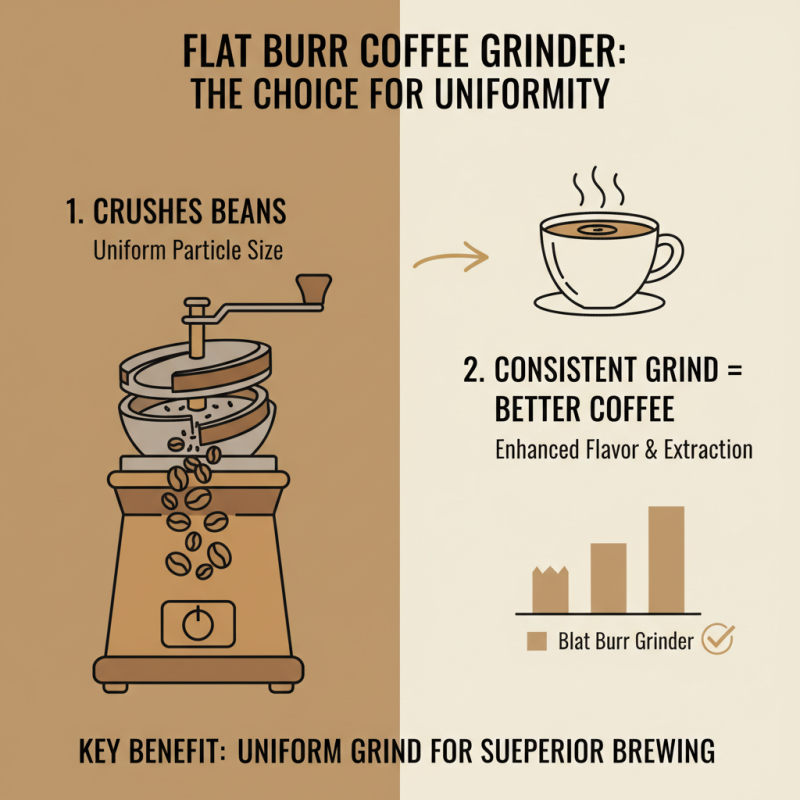
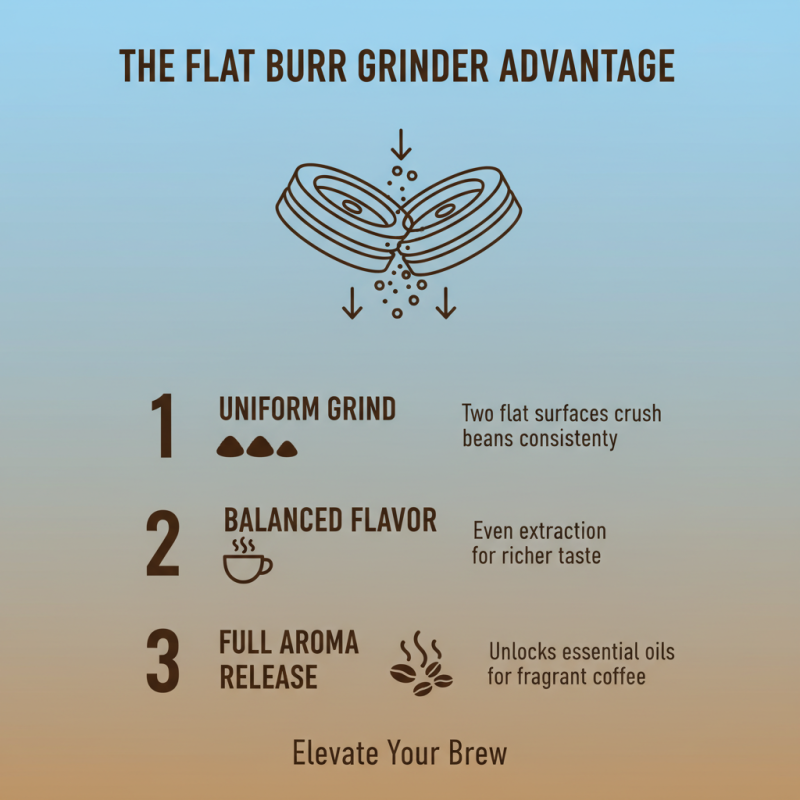
A flat burr grinder is a popular tool used for grinding coffee beans. Unlike blade grinders, which chop beans, flat burr grinders crush them between two flat, parallel surfaces. This method allows for a more uniform grind size. Consistency in grind is essential for brewing excellent coffee. Studies show that a uniform particle size can enhance extraction and flavor.
In the coffee industry, many professionals prefer flat burr grinders for their precision. Research indicates that grinding coffee with a flat burr can improve extraction rates by up to 30%. This can lead to a richer taste and better aroma. The flat design helps maintain a steady grind speed, minimizing heat during the process. Heat can negatively affect flavor, so this is crucial.
However, not all flat burr grinders are created equal. Some models may produce excessive fine particles, leading to over-extraction. Users often find that different burr materials and shapes can impact performance. With a variety of options available, it’s important to consider personal preferences and brewing methods. Choosing the right grinder is an essential part of the coffee-making journey.
The History and Development of Flat Burr Grinders
The flat burr grinder has a rich history, evolving alongside coffee consumption. Early grinding methods involved simple hand tools. People used mortar and pestle for grinding. It was a labor-intensive process, often resulting in inconsistent particle sizes. This inconsistency affected the flavor of coffee.
As demand for quality coffee grew, so did the need for better grinders. In the late 19th century, the first mechanical grinders appeared. They featured flat burrs, which allowed for more uniform grinding. The design minimized heat production, preserving essential oils in coffee beans. However, many early models were still imperfect. They required constant adjustments and sometimes produced a gritty texture.
Over time, innovations improved grinder efficiency. The introduction of electric models made grinding easier. User experience began to matter more. Yet, many still faced issues like static cling. Some grinders created a mess with ground coffee spilling everywhere. The journey of the flat burr grinder showcases human creativity and the ongoing quest for the perfect brew.
How Flat Burr Grinders Differ from Other Grinder Types
Flat burr grinders are unique in their design. They use two flat, parallel burrs to crush coffee beans. This mechanism allows for a consistent grind size. Uniformity is crucial for brewing quality coffee. Unlike conical burr grinders, flat burrs produce less variation in grind distribution. This leads to better extraction during brewing.
One key difference lies in the grinding process. Flat burrs exert uniform pressure on the beans. As a result, they generate less heat. This is important as excess heat can alter flavors. Conical grinders can create more heat due to their design. This can impact the coffee's taste negatively over time.
**Tip:** When using a flat burr grinder, adjust the grind size carefully. A finer grind can enhance extraction, but may lead to bitterness. Conversely, a coarser grind can result in under-extraction and sour notes. Experimenting is key.
Another aspect to consider is maintenance. Flat burrs can be easier to clean. This allows for preserving the coffee's flavor profile. Regular cleaning is essential to avoid stale tastes.
**Tip:** Ensure to clean the grinder regularly. It helps maintain flavor integrity in your coffee. Ignoring this step may lead to compromised brews.
What is a Flat Burr Grinder and How Does It Work?
| Feature |
Flat Burr Grinder |
Other Grinder Types |
| Grinding Mechanism |
Two flat burrs rotating against each other |
Various methods: blade, conical burrs |
| Grind Consistency |
Highly consistent |
Variable, can be less consistent |
| Heat Generation |
Lower heat generation |
Higher heat generation, especially blades |
| Grind Retention |
Minimal grind retention |
Can have significant grind retention |
| Suitable for |
Espresso and filter brewing |
Varies widely by type |
Mechanics of Flat Burr Grinding: How It Works
Flat burr grinders use two parallel plates for coffee grinding. These plates, or burrs, have sharp edges that crush beans evenly. This uniformity enhances the flavor extraction during brewing. According to a 2020 industry report, uniform grind size can improve extraction rates by up to 30%.
The mechanics of flat burr grinding involve a precise distance between the burrs. Adjusting this distance allows for different grind sizes. When burrs are too close, it may cause uneven grinding. This can impact taste negatively. Inconsistent grind size often leads to over-extraction or under-extraction.
Furthermore, the speed at which burrs rotate can affect heat generation. Excess heat can alter the flavor profile. Research shows that maintaining lower RPM reduces heat, preserving the coffee's essential oils. However, many users overlook this aspect, often prioritizing speed over flavor quality. It's worth considering how these small details can significantly impact your coffee experience.
Flat Burr Grinder Performance Comparison
Benefits of Using a Flat Burr Grinder for Coffee Preparation
When it comes to coffee preparation, a flat burr grinder stands out. It uses two flat grinding surfaces to crush beans evenly. This uniformity is essential for achieving a balanced flavor profile in coffee. The design helps release the full essence of the beans, leading to a more aromatic brew.
Many coffee enthusiasts find that using a flat burr grinder enhances their experience. This grinder type minimizes heat buildup, preserving the beans' fresh taste. With adjustable settings, users can control the grind size. This flexibility caters to various brewing methods. It's important to note that not all grinders are created equal. Some may require frequent calibration to maintain consistency. This can be frustrating, but a little experimentation goes a long way.
A flat burr grinder also offers ease of use. Coffee lovers can avoid the struggle of inconsistent grinds with better tools. However, it's essential to clean the grinder regularly. Residue can affect taste over time. Finding the right balance between convenience and fine-tuning may take some time. Still, the resulting cup can be worth the effort.