What Are the Top Types of Coffee Grinders for Buyers?
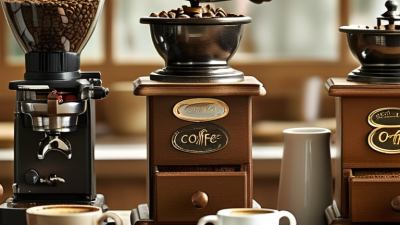
Choosing among the Top Coffee Grinders starts with a simple question: how do you brew? A hand grinder can suit travel or a quiet kitchen, while an electric model is faster for several cups. Blade grinders are usually inexpensive, but their uneven particles can make extraction less predictable. Burr grinders, whether flat or conical, offer more control over grind size. None is flawless.
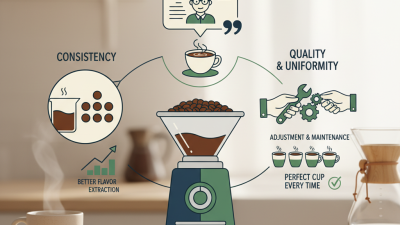
The National Coffee Association’s 2024 National Coffee Data Trends report found that 67% of U.S. adults had coffee the previous day. That figure signals a large daily audience, not a guarantee that every buyer needs expensive equipment. The Specialty Coffee Association’s brewing resources identify grind size as one variable affecting extraction. Coffee educator James Hoffmann, author of The World Atlas of Coffee, emphasizes grind consistency in his grinder guidance. In practical terms, buyers should compare particle uniformity, adjustment range, workflow, and cleaning—not just motor power or appearance.
A useful shortlist includes manual burr grinders, electric burr grinders, and blade grinders for budget-conscious buyers. Espresso drinkers often need finer, more precise adjustment; French press users may value reliable coarse settings. Listen for motor noise. Check how easily grounds cling inside the chamber. A small drawback matters: some grinders retain grounds or make a mess, even when their settings look impressive. The right choice depends on brewing habits, budget, and tolerance for daily upkeep. This guide compares the main types and explains which trade-offs deserve attention before you buy.
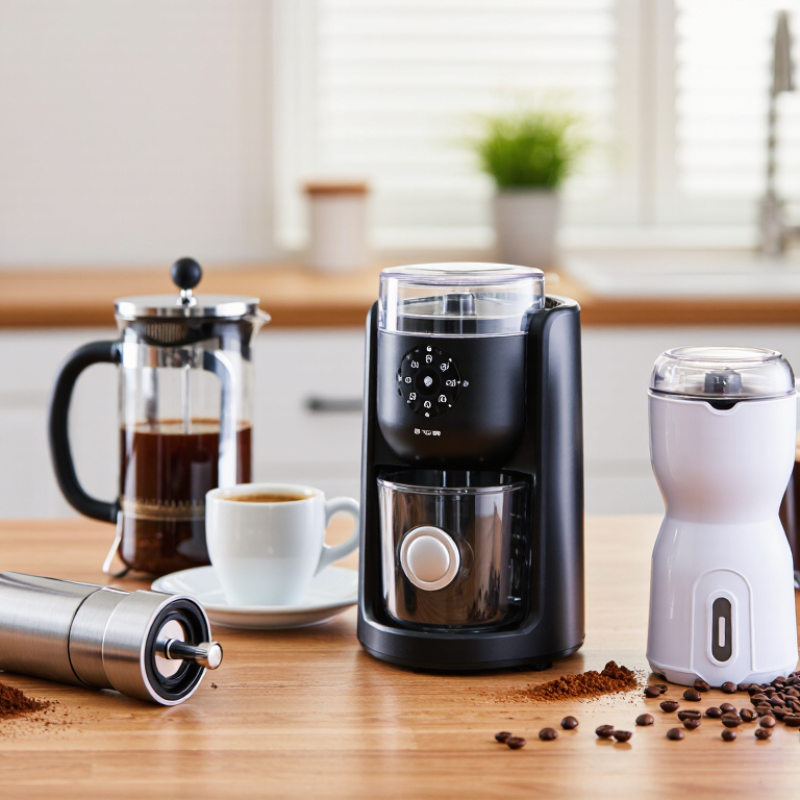
Coffee Grinder Basics: Blade, Burr, Manual, and Electric Designs
What Are the Top Types of Coffee Grinders for Buyers?
Coffee Grinder Basics: Blade, Burr, Manual, and Electric Designs
Blade grinders chop beans with spinning blades. They are usually affordable, but the pieces can vary in size. That uneven grind may produce a cup with both bitter and weak notes. Burr grinders crush beans between shaped surfaces, creating more consistent grounds. A 2024 National Coffee Data Trends report from the National Coffee Association found that 67% of U.S. adults had coffee the previous day. It does not compare grinder types, but it shows why a repeatable morning setup matters. For espresso, adjustable burr settings offer finer control; for a French press, a coarser grind helps limit muddy sediment.
Manual grinders use a hand crank and need no power. They suit small kitchens and travel, though grinding several cups takes effort. Electric grinders are quicker and easier for larger batches. Their trade-offs include counter space, noise, and price. A modest burr grinder may be the sensible choice, but no grinder fixes stale beans or poor brewing technique. I’ve found that even small grind changes can alter a cup; it can take a few tries to find a setting that tastes right.
Tips: Match grind size to the brewing method, then adjust gradually. Keep grounds dry, and clean the grinder regularly. Listen for uneven grinding or notice clumping; both can be useful clues, not perfect tests.
What Are the Top Types of Coffee Grinders?
Blade and burr describe how a grinder processes coffee; electric and manual describe how it is powered. These common designs combine those features in different ways.
The chart shows whether each design has a burr mechanism, an electric motor, or hand-powered operation. “Yes” and “No” indicate whether each feature is present.
Blade Grinders: How Rotating Blades Chop Coffee Beans
A blade grinder uses a fast-spinning metal blade to break coffee beans into smaller pieces.
The blade does not hold beans between calibrated surfaces; it chops wherever beans meet its path. In a typical small grinder, a short press starts the blade, while longer pulses produce finer grounds. The result depends on bean quantity, pulse length, and how the beans move inside the chamber.
Particle sizes can vary noticeably. You may find fine dust beside coarse fragments, even after several seconds of grinding. This unevenness can make water flow differently through the coffee, so a cup may taste both sharp and thin. Short pulses, with a gentle shake between them, can help redistribute beans. They will not make every particle identical. That compromise is real.
Blade grinders are compact and often straightforward to use, making them practical for occasional brewing or limited counter space. For a more consistent texture, a burr grinder generally offers better control, though it may cost more and take up more room. If you use a blade model, grind only what you need and clean out lingering grounds with a dry brush, following the machine’s instructions. I would not treat grind time as a precise setting; bean size and machine design change the outcome.
Burr Grinders: How Flat and Conical Burrs Shape Grind Consistency
Burr grinders crush coffee between two toothed surfaces, producing more even grounds than a spinning blade. Flat burrs use two parallel, ring-shaped plates. Beans pass between them, and the gap determines particle size. A narrow, stable gap can create a fairly uniform grind, which helps water extract coffee more evenly. You may notice the difference in a pour-over: fewer powdery fines can mean less sludge at the bottom of the cup. Alignment matters, though. Burr shape alone cannot promise consistency.
Conical burrs pair a ridged inner cone with an outer ring. Their angled surfaces guide beans downward as they are ground. The resulting particle mix can differ from that of flat burrs, but the gap setting, burr condition, and bean feeding also affect the result. Claims that one shape always tastes better are too neat. That distinction is useful, but not perfect. For a practical comparison, use the same beans and brewing method, then adjust each grinder until the brew time and flavor are close. Watch for clumps and noticeably large pieces. Those details can reveal more than the burr label.
What Are the Top Types of Coffee Grinders for Buyers? — Burr Grinders: How Flat and Conical Burrs Shape Grind Consistency
Manual vs. Electric Grinders: Differences in Power, Speed, and Control
Manual coffee grinders rely on arm strength rather than a motor. A hand crank turns burrs, crushing beans between two surfaces. The process is quiet. It suits small kitchens, travel, or early mornings when a loud motor feels intrusive. Many models offer grind adjustments, but changing settings can take practice. A fine espresso grind also demands more effort than a coarse French press grind. Your wrist notices.
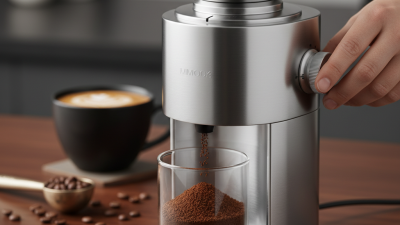
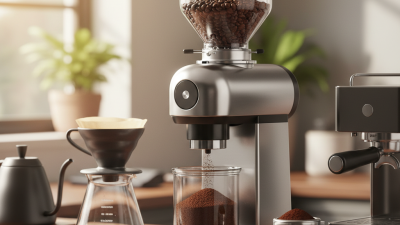
Electric grinders use a motor to spin the burrs, so they can prepare coffee quickly with little physical effort. This helps when making several cups before work. Some models provide timed or stepped settings, which can make repeat batches easier. But a motor does not guarantee a uniform grind. Burr design, adjustment quality, and bean freshness still matter. Noise can be an issue, especially on a quiet morning.
Control feels different with each type. A manual grinder gives direct feedback: you feel resistance as beans pass through the burrs. Electric controls may be faster to adjust, though small setting changes can be hard to judge without testing. Try the same beans at two settings and compare the brewed cups. That takes patience. I sometimes find hand grinding satisfying, then tiring when I am short on time. Weighing each dose and noting the setting can help either grinder produce more repeatable results.
Choosing a Grind: SCA Cupping Targets 70–75% Passing a 20-Mesh Sieve
Choosing a grinder starts with the particle size it produces, not just its advertised settings. For SCA-style cupping, a common target is
70–75% of the ground coffee passing through a 20-mesh sieve.
This gives buyers a practical reference when comparing burr grinders, including flat and conical designs. Blade grinders can create a wider mix of coarse and fine particles, making that target harder to reproduce.
A sieve test needs care. Grind a measured dose, shake it consistently, and weigh the coffee that passes through the mesh. Small differences in shaking or sieve condition can change the result. The target is a cupping reference, not a universal setting for every brewing method.
I would not treat one test as final; my own readings can vary when I rush the shaking. That is worth noticing.
Tips: Keep the coffee dose, grind setting, and shaking time consistent. Clean the sieve between tests. Compare several samples before deciding which grinder suits your routine. A few fine particles are normal. Look for repeatability, not perfection.