Leave Your Message

10 Essential Tips for Choosing the Best Commercial Coffee Grinder

Selecting the right Commercial Coffee Grinder is crucial for any coffee business. Studies show that quality coffee grinding can enhance flavor by up to 30%. This underscores the pivotal role that a reliable grinder plays in coffee preparation. Various models flood the market. Choosing the wrong one can lead to inconsistent grind sizes and compromised taste.

Consider the fact that 83% of consumers prefer freshly ground coffee. As a result, investing in a top-tier Commercial Coffee Grinder can significantly impact customer satisfaction. It not only ensures uniformity in grind size but also preserves the aromatic oils in the beans. However, understanding your specific needs is vital to making an informed choice.

Remember, no single grinder fits every business model. Factors such as volume, grind type, and maintenance must be carefully evaluated. Many businesses overlook these details, leading to costly mistakes. Reflecting on these aspects can help optimize your coffee service. Choosing wisely can elevate your establishment’s reputation and drive success.
10 Essential Tips for Choosing the Best Commercial Coffee Grinder

Understanding Different Types of Commercial Coffee Grinders

When selecting a commercial coffee grinder, understanding the types available is crucial. There are two main categories: blade grinders and burr grinders. Blade grinders are often cheaper. However, they can produce inconsistent grind sizes. This inconsistency impacts the flavor profile of the coffee. Many industry reports suggest that burr grinders provide superior results. They ensure uniform grind size, which is essential for brewing quality coffee.

Burr grinders use two rotating surfaces to crush the beans. They offer different grind settings. This versatility allows roasters to cater to various brewing methods. According to the Specialty Coffee Association, professional setups often prefer burr grinders. They improve extraction, leading to a richer taste. Choosing the right grinder also depends on volume needs. Higher-capacity grinders are available for busy cafes.

In considering all options, reflection on your specific requirements is important. Not every business needs the highest-end model. Budget constraints may limit choices. Quality can still be achieved within a reasonable price range. Research indicates that investing in a good grinder pays off in the long run. It can dramatically enhance the coffee experience for customers. A deliberate approach to selecting the right grinder will yield better results.
Key Features to Consider When Selecting a Coffee Grinder

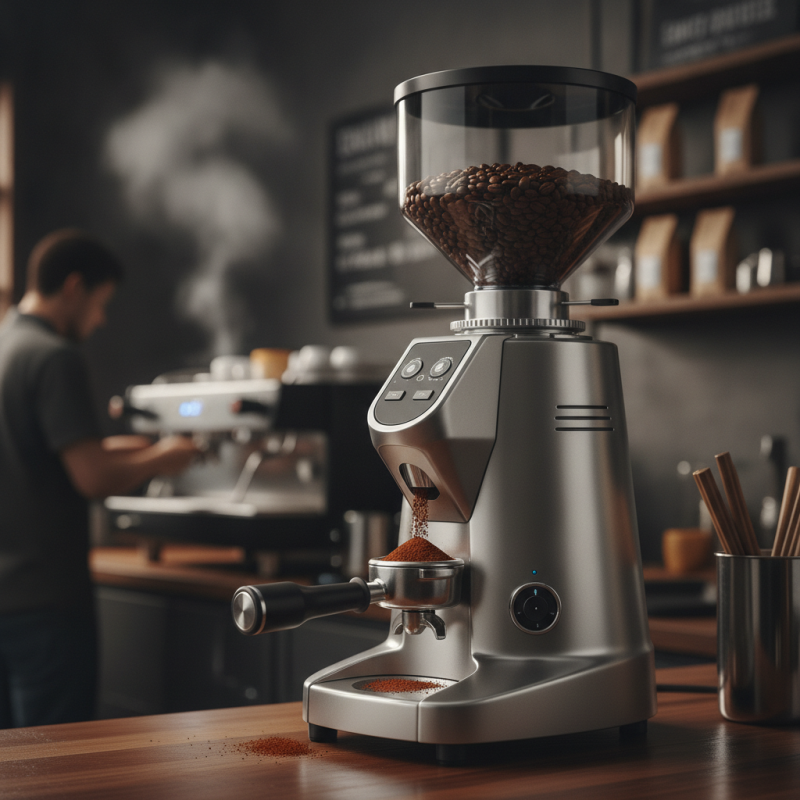
When selecting a commercial coffee grinder, key features are vital for optimal performance. A grinder’s burr type significantly impacts grinding consistency. Studies show that flat burrs often provide a more uniform grind, which enhances flavor extraction. In contrast, conical burrs are less likely to cause heat retention, preserving coffee’s fresh taste.

Another important factor is grind size adjustment. A versatile grinder allows users to easily switch from espresso to coarse grinds. Research indicates that 75% of coffee professionals agree that grind size has the most significant influence on brew quality. The ability to fine-tune settings can significantly affect extraction rates and overall flavor profiles, making this feature a priority.

Moreover, consider the grinder's build quality and motor power. A sturdy design ensures durability under high-demand conditions. A powerful motor can process beans quickly without overheating, which is crucial in a busy café setting. Many users note that underpowered grinders can result in inconsistent grinds and longer wait times. This not only affects customer satisfaction but also impacts overall efficiency in service.

Evaluating Grinder Size and Capacity for Your Business Needs

Choosing the right commercial coffee grinder requires careful evaluation of size and capacity. The grinder's capacity must align with your business's daily coffee demands. A grinder that is too small will struggle to keep up. Conversely, an oversized grinder may take up valuable counter space and lead to stale grounds.

Consider your customer volume. A bustling café requires a larger grinder to handle high traffic. Smaller establishments with lower footfall might benefit from a compact model. Think about the variety of coffee drinks. Different blends may need specific grinding sizes. Flexibility in capacity allows you to meet diverse customer preferences.

Don't overlook the importance of grinder dimensions. Ensure that the grinder fits seamlessly within your workspace. A bulky machine might be tempting for its capacity, but it could hinder workflow. Sometimes, a smaller grinder can yield fresher coffee if managed correctly. Reflect on your specific needs and be open to adjusting your initial choices.

Assessing Grinding Speed and Consistency for Optimal Brew Quality

10 Essential Tips for Choosing the Best Commercial Coffee Grinder

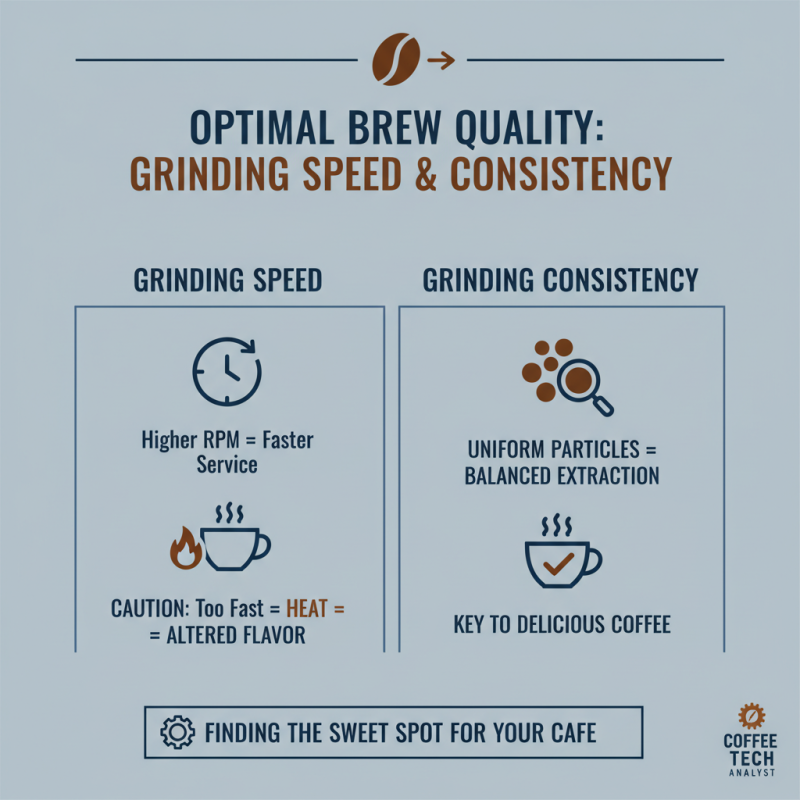
When choosing a commercial coffee grinder, grinding speed and consistency are crucial factors. A grinder's speed directly affects how quickly a cafe can serve customers. According to recent industry reports, grinders with a higher RPM (revolutions per minute) significantly reduce grinding time. However, faster isn't always better. A very high RPM can produce heat, which may alter the coffee's flavor profile.

Consistency is vital for optimal brew quality. Inconsistent grind sizes lead to uneven extraction, diminishing the flavor. Studies show that a uniform grind enhances extraction rates by up to 25%. Burr grinders are often preferred for their ability to maintain consistent particle size, but not all burr grinders are created equal. Many users have reported inconsistencies, even with reputable models.

Calibration is another aspect often overlooked. Regularly testing grind consistency can prevent subtle variations that ruin a cup. Some industry experts suggest using a mesh sieve to analyze the grind size distribution. This simple method can reveal significant inconsistencies that might otherwise go unnoticed. In this evolving industry, attention to detail is key. Investing in a quality coffee grinder that balances speed and consistency may seem challenging, but it pays off in delivering superior coffee.

Budgeting for Your Commercial Coffee Grinder Purchase and Maintenance Costs

10 Essential Tips for Choosing the Best Commercial Coffee Grinder

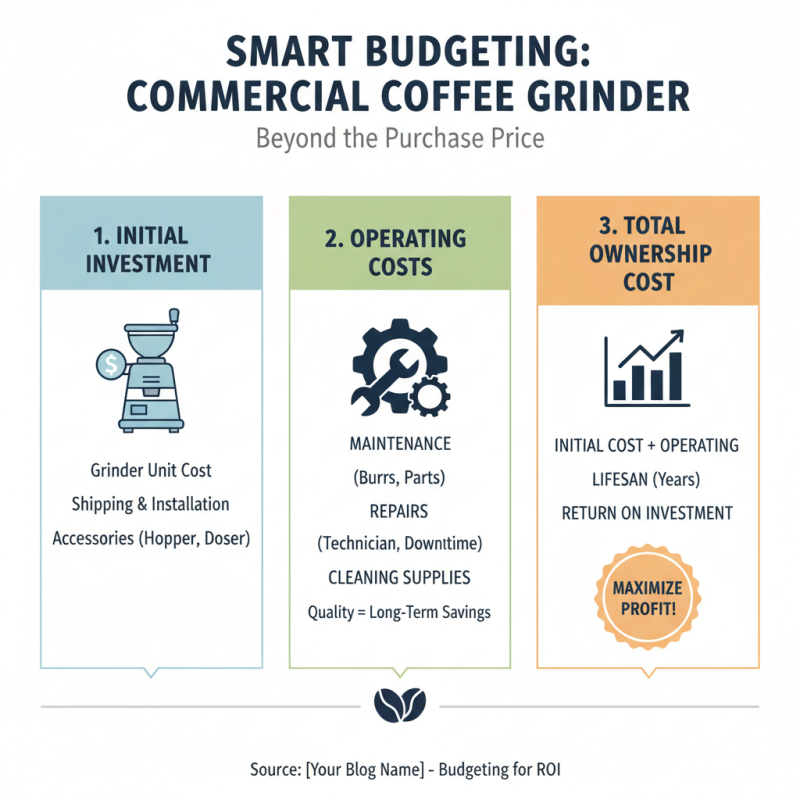
When budgeting for a commercial coffee grinder, look beyond the initial purchase price. Consider ongoing maintenance costs. Quality grinders may have higher upfront costs, but they often save money over time. Assess the total cost of ownership. This calculates repair costs and potential downtime. A well-maintained grinder can last many years, ensuring you get the best return on investment.

Think about the type of grind you need. Different grinds may require different machines. A versatile grinder can meet various customer demands. Yet, it may come at a higher cost. Evaluate how often you grind coffee. If you grind frequently, invest more upfront to secure durability. Research average repair costs. Unexpected failures can strain your budget.

Maintenance is essential. Regular cleaning and part replacements help extend your grinder's lifespan. Set aside a monthly budget for maintenance. Small investments now can prevent larger issues later. Don’t overlook training staff on proper use. Skilled employees reduce the risk of damage. Investing wisely in both equipment and training will yield long-term benefits.