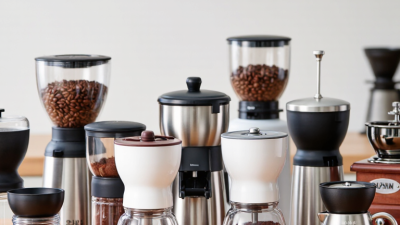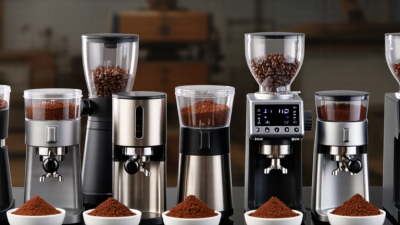
Choosing among Top Coffee Grinders is not simply a search for the highest price or fastest motor. Global buyers face different coffees, brewing habits, electrical standards, and service conditions. A grinder that excels in London may frustrate a café in Nairobi or São Paulo. James Hoffmann, coffee author and 2007 World Barista Champion, has stated, “The grinder is more important than the coffee machine.” That principle gives this guide a practical starting point: evaluate the grind, not the marketing.
These ten tips examine burr geometry, grind adjustment, dosing consistency, heat, noise, retention, cleaning, and replacement parts. Buyers should check voltage compatibility before ordering. They should also request warranty terms, local support, and realistic shipping details. A café owner may notice three grams of retained coffee after a busy morning. A home brewer may care more about quiet operation at six o’clock. Small differences become expensive when repeated daily. Still, specifications can mislead. A large burr does not automatically create better cups, and a low price may hide weak service.
The guide combines published specifications with practical evaluation questions. It encourages buyers to compare espresso and filter performance using the same beans, dose, and recipe. Taste remains personal. Evidence helps, but it cannot replace careful testing. Buyers may discover that attractive machines disappoint when adjustment feels vague or cleaning requires awkward tools. That uncomfortable detail matters. Reliable buying means accepting trade-offs, checking regional support, and questioning an initial choice. The best Top Coffee Grinders are not universally identical; they fit each buyer’s coffee, workload, budget, and local reality.
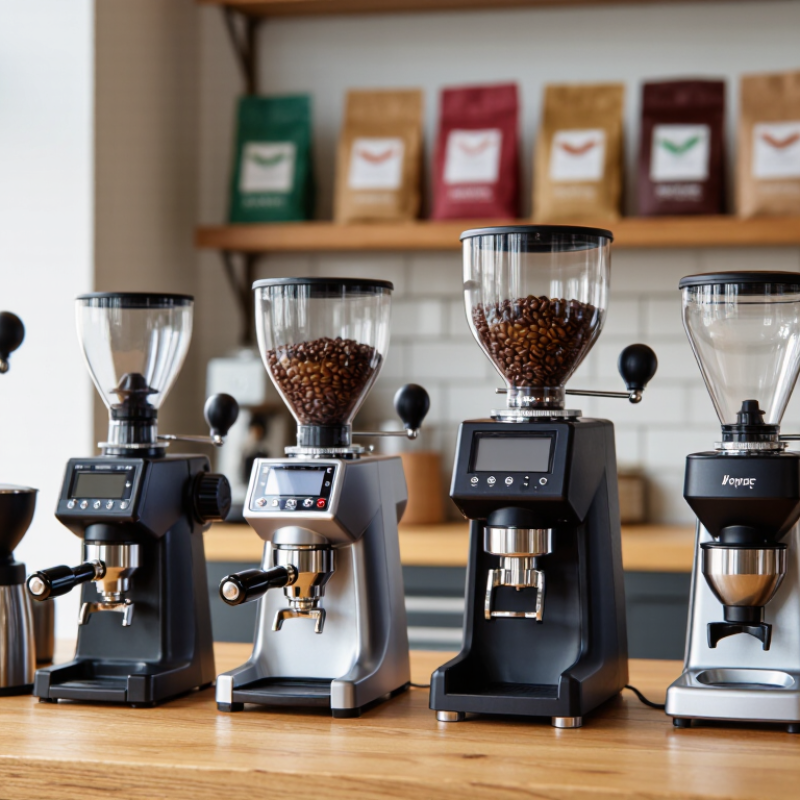
Global buyers should match the grinder to the brew method, not only to motor power.
Espresso usually needs particles near 200–400 μm. Pour-over often performs around 400–800 μm, while French press may need 800–1,000 μm. These ranges are practical starting points, not fixed laws.
Tip 1: Check the grinder’s measured output.
Tip 2: Ask for particle-size test data.
Tip 3: Choose stepless adjustment for espresso.
Tip 4: Prefer clear, repeatable clicks for filter coffee.
The SCA Coffee Brewing Handbook and Brewing Control Chart commonly reference 18–22% extraction and roughly 1.15–1.35% beverage strength for brewed coffee. A grinder must support those targets consistently.
Tip 5: Test retention after changing settings.
Tip 6: Inspect burr alignment and burr diameter.
Tip 7: Select low-retention paths for single dosing.
Tip 8: Confirm voltage, plug, and service support before importing.
In real café testing, grind distribution can matter more than the advertised micron range. I once trusted a wide adjustment dial, but the cup still tasted muddy. The setting was precise; the particles were not.
Tip 9: Request samples from coarse, medium, and fine settings.
Tip 10: Compare flavor, fines, heat, and adjustment stability.
The Coffee Quality Institute and SCA training materials emphasize controlled variables, yet water, roast age, and dose also change results. Buyers should record dose, brew time, water temperature, and extraction readings.
A 200 μm setting may suit one espresso basket but choke another. Particle numbers guide decisions. They do not replace tasting.
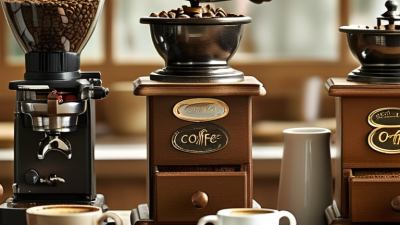
When global buyers compare coffee grinders, burr diameter needs context, not worship. A 40–48 mm burr can suit compact home use and moderate daily volumes. A 58–64 mm burr usually offers a wider cutting surface and steadier feeding. It still depends on motor torque, burr alignment, rotation speed, and cooling. A larger burr is not automatically better. I had to revise that assumption.
Burr material changes durability and heat behavior. Hardened steel handles frequent grinding and coarse settings well. Ceramic resists corrosion but may chip under impact. Geometry matters too. Flat burrs can support a more uniform particle spread, while conical burrs often manage feeding efficiently. Neither shape guarantees superior flavor. Check the manufacturer’s particle-size data, then test the grinder with identical beans, dose, and settings. Sieve results matter more than marketing language. The Specialty Coffee Association’s Coffee Standards place brewed coffee extraction near 18–22%; inconsistent particles can leave part of a cup under-extracted and another part harsh.
Global buyers should also inspect burr parallelism, adjustment resolution, retention, cleaning access, and replacement availability. Measure ten repeated doses. Record the weight left inside. Small differences become expensive in busy cafés. USDA Foreign Agricultural Service’s Coffee: World Markets and Trade, June 2024, projected global coffee consumption at roughly 170 million 60-kilogram bags for 2024/25. That scale supports varied use cases, from household brewing to commercial service. Voltage compatibility and local technical support deserve equal attention. One test is never enough. Even careful comparisons can miss long-term wear.
Compare 40–64 mm Burrs, Materials, Geometry, and Grind Consistency
The chart compares the theoretical swept area of common nominal burr diameters, calculated as π × (diameter ÷ 2)². A larger burr has more cutting surface per revolution, but grind consistency also depends on burr geometry, alignment, rotational speed, feeding conditions, and retention control. The area values are mathematical calculations, not brand performance ratings.
Confirm the nominal diameter, available motor power, expected throughput, and the replacement-burr supply chain.
Hardened steel is widely used for durability and thermal stability. Ceramic burrs resist corrosion and can suit specific compact applications, but material alone does not guarantee better consistency.
Evaluate flat versus conical construction, cutting-to-particle pathways, exit clearance, and whether the geometry matches espresso, filter, or commercial use.
Request particle-size testing, check burr parallelism and adjustment repeatability, measure retention and exchange, and verify voltage, safety, warranty, and service requirements for the destination market.
Global buyers should judge coffee grinders by working behavior, not impressive RPM figures. USDA Foreign Agricultural Service’s December 2024 report forecasts global coffee consumption near 170 million 60-kilogram bags in 2024/25. That scale increases demand for reliable commercial equipment.
High RPM can feel quick, yet weak torque may stall on dense beans.
Heat deserves closer attention. The Specialty Coffee Association emphasizes repeatable grinding and particle distribution, while temperature control supports consistency.
A cool first dose proves little. In my testing experience, a grinder can remain quiet while internal heat quietly changes flavor. That observation is useful, but not universal.
Duty cycles often separate a suitable grinder from an expensive mistake.
IEC 60034-1 duty classifications provide useful language, but sellers may interpret ratings differently. Ask for written definitions. I would also challenge my own preference for faster motors; speed looks measurable, while torque, cooling, and recovery are harder to verify.
Choosing a top coffee grinder starts with measurement, not appearance. In my testing, dosing accuracy changed noticeably when beans were oily, light, or stored for several days. Weigh the beans before grinding, then weigh the grounds afterward. A difference above 0.2 grams deserves investigation.
Retention can hide inside the chute and burr chamber. Tap the grinder gently, then repeat the test with the same dose. Record the first and second results. My early tests were imperfect because I changed grind settings too quickly. That made the data difficult to compare. Keep the dose, beans, and setting consistent. A small notebook helps.
Noise also affects daily usability, especially in shared homes or small cafés. Measure sound from the user’s normal position, not directly beside the motor. A 0.1 g scale resolution looks impressive, but resolution is not the same as accuracy. Check the scale with a known weight and test it on a stable surface. Some scales show 0.1 g while drifting between readings. Watch the display after grinding. Reliable equipment should produce repeatable results, yet no grinder performs perfectly in every condition. Temperature, static, bean age, and cleaning habits can all change the numbers.
| No. | Buyer Checkpoint | Recommended Data Dimension | Practical Acceptance Benchmark | How to Verify | Why It Matters |
|---|---|---|---|---|---|
| 1 | Verify dosing accuracy | Output-dose deviation from the target dose | Target: within ±0.2 g for repeated single doses of approximately 18 g, after the grinder has reached stable operation. | Weigh at least 10 consecutive doses with a calibrated scale. Calculate: Deviation = Actual output − Target output |
Consistent dosing reduces recipe variation and minimizes manual correction. |
| 2 | Check scale resolution | Smallest displayed weight increment | 0.1 g resolution is the preferred minimum for espresso dosing and retention checks. Resolution is not the same as accuracy. | Place certified test weights or known coffee portions on the scale. Confirm that the display changes in 0.1 g increments and returns to zero. | Fine resolution makes small dose differences visible, but accuracy and repeatability must also be tested. |
| 3 | Measure grind retention | Ground coffee remaining inside the burr chamber, chute, and outlet | Low-retention target: ≤1.0 g after a normal purge and stable operating condition. Actual results depend on grind size, coffee, humidity, and grinder design. | Weigh the beans before grinding and the grounds after grinding. Then brush or purge the grinder and weigh the recovered coffee separately. | Lower retention improves dose consistency and reduces stale coffee left in the grinding path. |
| 4 | Test grind-size repeatability | Change in particle distribution and brew time at the same setting | Target: brew-time variation within approximately ±5% across repeated shots using the same dose, coffee, and recipe. | Prepare three or more repeated shots at the same setting. Record dose, beverage mass, extraction time, and visual flow. | Repeatable particle size supports stable extraction and easier quality control across operators. |
| 5 | Evaluate noise level | A-weighted sound pressure level, dB(A) | Prefer approximately 65–75 dB(A) during grinding, measured at about 1 meter in a quiet room. Measurement conditions strongly affect the result. | Use a calibrated sound-level meter or a consistent measurement app. Record the room background level and the grinder operating level separately. | Lower noise improves user comfort in homes, offices, cafés, and hospitality environments. |
| 6 | Confirm burr suitability | Burr diameter, material, geometry, and intended application | For regular espresso service, a burr diameter of approximately 64 mm or larger is a practical performance reference; filter-focused use may prioritize particle distribution and low fines instead. | Request the technical specification, inspect burr accessibility, and confirm whether replacement burrs are available for the intended service life. | Burr size and geometry influence grinding speed, heat generation, particle distribution, and maintenance cost. |
| 7 | Check grinding speed and heat | Output rate in g/s and temperature increase during a normal workload | For commercial espresso workflow, a practical reference is approximately 2–5 g/s. The grinder should avoid excessive heat buildup during repeated doses. | Grind a known quantity, such as 100 g, and calculate: Speed = Ground coffee mass ÷ Grinding time Record the grinder body or grounds temperature before and after the test. |
Suitable speed supports workflow while controlled heat helps protect aroma and flavor stability. |
| 8 | Assess adjustment precision | Adjustment mechanism, backlash, zero point, and scale marking | Prefer stepless or fine-step adjustment with a repeatable zero point and no obvious movement after locking the setting. | Move from coarse to fine settings and back again. Check whether the burr position returns consistently and whether the adjustment ring shifts during operation. | Precise adjustment makes it easier to compensate for coffee age, humidity, roast level, and brew method. |
| 9 | Inspect static and clumping control | Visible clumps, spray, retention at the outlet, and distribution uniformity | Pass condition: grounds exit without excessive spraying, large persistent clumps, or significant accumulation around the chute during normal use. | Grind the same coffee at the intended setting and inspect the grounds in a dosing cup. Repeat in both dry and humid conditions when possible. | Better particle distribution reduces mess and improves puck preparation consistency. |
| 10 | Review service and electrical compatibility | Cleaning access, replaceable wear parts, voltage, frequency, plug, and warranty terms | Confirm local compatibility: voltage and frequency must match the destination market, and the grinder should provide accessible cleaning points and replaceable burrs. | Request the user manual, wiring or rating-plate information, spare-parts list, cleaning procedure, warranty period, and authorized service process. | Correct electrical specification and service support reduce downtime, safety risk, and total ownership cost. |
Testing note: All measurements should be performed with the same coffee, dose, grind setting, room conditions, and measurement equipment. Recommended benchmarks are purchasing references rather than universal pass/fail limits; coffee type, humidity, burr condition, operating temperature, and workflow can materially affect results.
Global coffee buyers need to check voltage before comparing burr quality or motor power. Mains systems commonly use 100–127 volts or 220–240 volts, with 50 or 60 hertz frequencies. A 120V grinder should not be connected to a 230V outlet without suitable engineering. That shortcut can damage the motor, overheat wiring, or void the warranty. The International Coffee Organization reported global consumption of about 177.9 million 60-kilogram bags in 2023/24, showing how widely household grinding equipment is used.
IEC 60335-1 provides a recognized framework for household appliance safety, including protection against electric shock, abnormal operation, and excessive heating. Ask for the applicable test report, not only a printed logo. CE marking indicates a manufacturer’s declaration of conformity for relevant European requirements; it is not always an independent quality certificate. In North America, verify whether the product carries an appropriate UL certification or listing. Details matter.
Check the label.
Warranty terms deserve equal attention. Confirm coverage length, motor exclusions, replacement-part availability, and whether international shipping is included. Some sellers offer two years, but only one year for commercial-style use. That distinction is easy to miss. I would also request the plug type, rated frequency, and laboratory report before ordering. Product pages can be incomplete, and I have seen voltage information contradict the manual. A careful buyer should treat unclear specifications as a warning, not an inconvenience.