China Top 10 Coffee Grinders for Global Buyers
China has become a major source of coffee equipment for importers, cafés, roasters, and home users worldwide. This guide introduces China Top 10 Coffee Grinders for Global Buyers, focusing on performance, consistency, and purchasing reliability. It examines burr design, motor strength, grind adjustment, noise, heat control, retention, and cleaning access. These details matter when a grinder operates for several hours each day.
The selected models represent different buying needs and price levels. Some suit espresso bars with demanding workflows. Others fit small cafés, offices, or serious home brewers. Product specifications, factory capabilities, warranty terms, and replacement-part access are also considered. A grinder may produce a fine, even grind, yet still disappoint if its motor overheats or its calibration changes. Practical value extends beyond the first invoice.
This review uses manufacturer data, market comparisons, and realistic buyer concerns. However, online specifications cannot replace hands-on testing. Claims about durability should be verified through samples, inspection reports, and customer references. Voltage compatibility, plug design, packaging, and required certifications must also be confirmed for each destination market. Details matter.
The term Top Coffee Grinders should not mean the most expensive products. It should describe equipment that delivers dependable results for a clearly defined use. We have tried to keep the comparison fair, although some information remains difficult to verify across suppliers. That limitation deserves attention. Global buyers should request updated quotations, sample testing, and written after-sales commitments before placing larger orders. A careful decision begins with measurable performance, not attractive catalog photos.
How China’s Coffee Grinder Market Serves Global Buyers
China’s coffee grinder market serves global buyers through broad manufacturing capacity, flexible customization, and competitive production costs. The top 10 grinders for export are not defined by appearance alone. Buyers usually compare burr material, motor stability, grind adjustment, noise levels, packaging, and replacement-part access.
In factory evaluations, a consistent grind matters more than a polished product photo. A sample test should include espresso, pour-over, and coarse settings. Measure output weight after ten seconds and check whether the motor overheats. Some suppliers can adjust voltage, plug types, labels, and carton sizes for different markets. That practical flexibility helps importers reduce redesign work. It also creates risks.
A low price may hide weaker bearings, uneven burr alignment, or limited quality records. Ask for test reports, production samples, inspection procedures, and clear warranty terms. Confirm food-contact materials and electrical compliance before placing a large order. Communication deserves attention too. Technical drawings can prevent costly misunderstandings. Still, no document replaces a physical test. I have seen attractive samples perform differently during repeated use. That lesson is easy to overlook. Global buyers should assess each grinder by its intended users, daily workload, service conditions, and total landed cost rather than factory price alone.
How to Compare the Top 10 Chinese Coffee Grinders
Comparing China’s top 10 coffee grinders requires more than checking price or appearance. Start with the burr type, diameter, adjustment range, and motor power. Larger burrs may improve grinding speed, but they can also raise heat and energy use. Ask for particle-size test results, not only product photographs. A practical test should include espresso, pour-over, and French press settings.
Consistency matters most. Measure the retained coffee after grinding 20 grams of beans. Then check the dose again after cleaning the chute. Small differences can affect extraction. Noise also deserves attention. A grinder listed at 70 decibels may sound louder in a small café. Request testing conditions, because room size and measuring distance change the result.
Look closely at materials and maintenance. Stainless steel burrs, stable bearings, and a firm adjustment mechanism usually support longer service. However, marketing language can hide weak details. Confirm warranty length, spare-part availability, packaging strength, and electrical compliance for the target market. Importers should compare sample quality with bulk production, since they may not match perfectly. I would also calculate shipping, duties, replacement parts, and training costs. A low factory price is not always a low operating cost. Some evaluations remain uncertain without months of use. That is an honest limitation, not a failure.
China Top 10 Coffee Grinders for Global Buyers - How to Compare the Top 10 Chinese Coffee Grinders
A practical comparison of representative Chinese-manufactured grinder configurations for importers, distributors, cafés, offices, and home users.
| Rank |
Representative Configuration |
Best Use |
Burr Type |
Burr Diameter |
Adjustment System |
Typical Motor Power |
Typical Speed |
Hopper Capacity |
Typical Dimensions
(W × D × H) |
Approx. Net Weight |
Global-Buyer Considerations |
| 1 |
Commercial Flat-Burr Espresso Grinder |
Busy cafés |
Flat steel burrs |
64 mm |
Stepless micrometric collar |
250–400 W |
1,300–1,600 rpm |
1.2–1.5 kg |
220 × 370 × 600 mm |
10–14 kg |
Strong choice for high-volume espresso service; confirm thermal protection, duty cycle, plug type, and replacement-burr availability. |
| 2 |
Commercial Conical-Burr Espresso Grinder |
High-volume espresso |
Conical steel burrs |
68–83 mm |
Stepless adjustment |
350–650 W |
350–650 rpm |
1.5–2.0 kg |
240 × 420 × 650 mm |
14–20 kg |
Lower burr speed can reduce heat generation; evaluate grind retention, motor cooling, service access, and shipping weight. |
| 3 |
Multi-Purpose Flat-Burr Grinder |
Espresso and filter |
Flat steel burrs |
55–64 mm |
Stepless collar or numbered dial |
180–300 W |
800–1,400 rpm |
300–600 g |
170 × 300 × 500 mm |
7–11 kg |
Useful for specialty retailers and small cafés; compare single-dose performance, retention, static control, and alignment consistency. |
| 4 |
Single-Dose Bellows Grinder |
Specialty coffee |
Flat or conical steel burrs |
55–64 mm |
Stepless adjustment |
150–250 W |
500–1,200 rpm |
30–60 g |
160 × 250 × 430 mm |
5–8 kg |
Designed for low retention and frequent bean changes; check bellows durability, dosing cup fit, and the consistency of grind-size markings. |
| 5 |
Automatic Dosing Espresso Grinder |
Retail and office use |
Flat steel burrs |
50–64 mm |
Timed electronic dosing |
150–300 W |
900–1,500 rpm |
500–1,200 g |
180 × 330 × 520 mm |
7–12 kg |
Convenient for repeatable portions; verify timer resolution, display language, memory settings, hopper safety switch, and electrical certification. |
| 6 |
Brew-Bar and Filter Grinder |
Pour-over service |
Flat steel burrs |
64–83 mm |
Stepped or stepless adjustment |
250–500 W |
600–1,200 rpm |
500–1,500 g |
220 × 360 × 600 mm |
10–16 kg |
Prioritize uniform coarse grinding, low fines, easy chute cleaning, and compatibility with paper-bag or container-based retail dosing. |
| 7 |
Compact Home Espresso Grinder |
Home baristas |
Conical or flat steel burrs |
38–55 mm |
Numbered dial or stepped ring |
120–200 W |
450–1,400 rpm |
200–350 g |
130 × 220 × 370 mm |
3.5–6.5 kg |
Compact and economical for moderate use; assess adjustment backlash, portafilter support, noise claims, and access to consumer spare parts. |
| 8 |
Entry-Level Conical-Burr Grinder |
Home and office |
Conical steel burrs |
38–48 mm |
Stepped adjustment |
100–180 W |
400–800 rpm |
200–300 g |
120 × 190 × 330 mm |
2.5–4.5 kg |
Suitable for moderate daily volumes and broad brew methods; compare grind consistency, motor cooling, anti-static design, and warranty terms. |
| 9 |
Portable Manual Burr Grinder |
Travel and outdoor use |
Stainless steel or ceramic conical burrs |
38–48 mm |
Click-based stepped adjustment |
Manual operation |
Approximately 1–2 g per turn |
20–35 g |
50–65 × 50–65 × 150–200 mm |
0.4–0.8 kg |
Portable and free from voltage restrictions; examine axle stability, bearing smoothness, burr alignment, handle attachment, and coating durability. |
| 10 |
Shop and Small-Roaster Bulk Grinder |
Retail packaging |
Large flat steel burrs |
75–98 mm |
Stepped or calibrated collar |
600–1,500 W |
500–1,500 rpm |
1.5–3.0 kg |
260 × 450 × 750 mm |
20–35 kg |
Built for larger batches and retail grinding; confirm throughput, bag-holder design, cooling time, dust control, power requirements, and freight packaging. |
Comparison note: Specifications are representative market ranges for Chinese-manufactured grinder configurations rather than claims for a single branded product. Actual performance varies by burr geometry, motor design, calibration, voltage, production batch, and testing method. Buyers should request a current datasheet, sample testing, electrical certifications, warranty terms, and spare-parts information before placing an order.
Selection Criteria for Different Brewing Needs and Markets
China Top 10 Coffee Grinders for Global Buyers
Selection Criteria for Different Brewing Needs and Markets
A strong grinder choice starts with the brewing method, not the product ranking. Espresso needs narrow particle distribution, precise adjustment, and low retention. Pour-over buyers usually value clarity, repeatability, and easy cleaning. Cold-brew operations need higher throughput and stable coarse grinding. The International Coffee Organization estimated global coffee consumption at 177.9 million 60-kilogram bags in 2023/24. This growth creates different equipment demands across homes, cafés, offices, and hospitality sites.
Market conditions matter just as much. Check voltage, frequency, plug design, warranty coverage, and replacement-part availability before comparing prices. A 220–240V, 50Hz model may suit many regions, but not every buyer. Commercial users should examine grinding speed, duty cycle, heat control, and noise levels. The National Coffee Association reported that 67% of American adults drank coffee daily in Spring 2024. That figure supports demand for convenient home grinders, but it does not prove that one grinder fits every household. A ranking can still mislead.
Tips: Request particle-size data, not only marketing claims. Test retention with a real dose. Measure noise beside the brewing area. Review service response times in the destination market. Sustainable packaging helps, yet repairability may matter more over five years. Buyers should also leave room for human error; even an accurate grinder performs poorly when users change dose, beans, or cleaning habits without recalibration.
China Top 10 Coffee Grinders for Global Buyers
Selection criteria for different brewing needs and markets
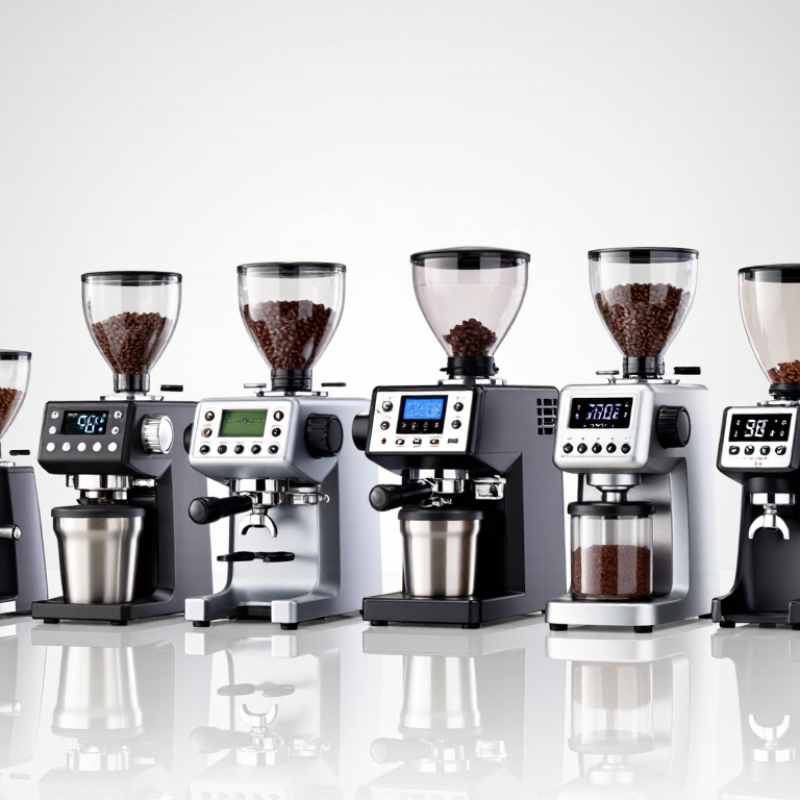
Larger burrs generally support faster grinding and higher daily workloads, while more adjustment positions help users fine-tune espresso, pour-over, French press, and commercial brewing. The ten entries represent common anonymous grinder configurations found across global buyer segments rather than brand rankings.
Import, Quality, Certification, and Supplier Considerations
Choosing among China’s top coffee grinders requires more than comparing price and motor power. Global buyers should check burr material, grinding consistency, heat control, noise levels, and daily capacity. A sample test can reveal uneven particles that product photos hide. Measure the grind at espresso and filter settings. Small details matter.
Import preparation should begin with the destination market. Confirm voltage, plug type, labeling rules, packaging strength, and applicable customs documents. Ask for test reports and declarations covering electrical safety, electromagnetic compatibility, and restricted substances. Food-contact claims also need supporting documentation when relevant. Certificates should match the exact model, factory, and production status. A copied file is not enough.
Supplier reliability appears in practical behavior. Request a video inspection of the assembly line, packaging area, and final testing process. Check whether the supplier records burr alignment, motor temperature, and noise results. Ask about spare burrs, switches, timers, and warranty handling. Response speed matters. So does clear English documentation.
I once treated a low defect rate as reliable evidence. That was too optimistic. A small production batch may not represent long-term performance. Buyers should test several units from different batches and inspect cartons after simulated shipping. Confirm payment terms, lead time, minimum order quantity, and inspection rights in writing. The best supplier is not always the cheapest. It is the one that can repeatedly deliver safe, consistent grinders with traceable quality.